Editorial — Published 2026-09-22 — By Wangzian, Pet Lifestyle Curator
How to Help a Cat Eat With a Cone
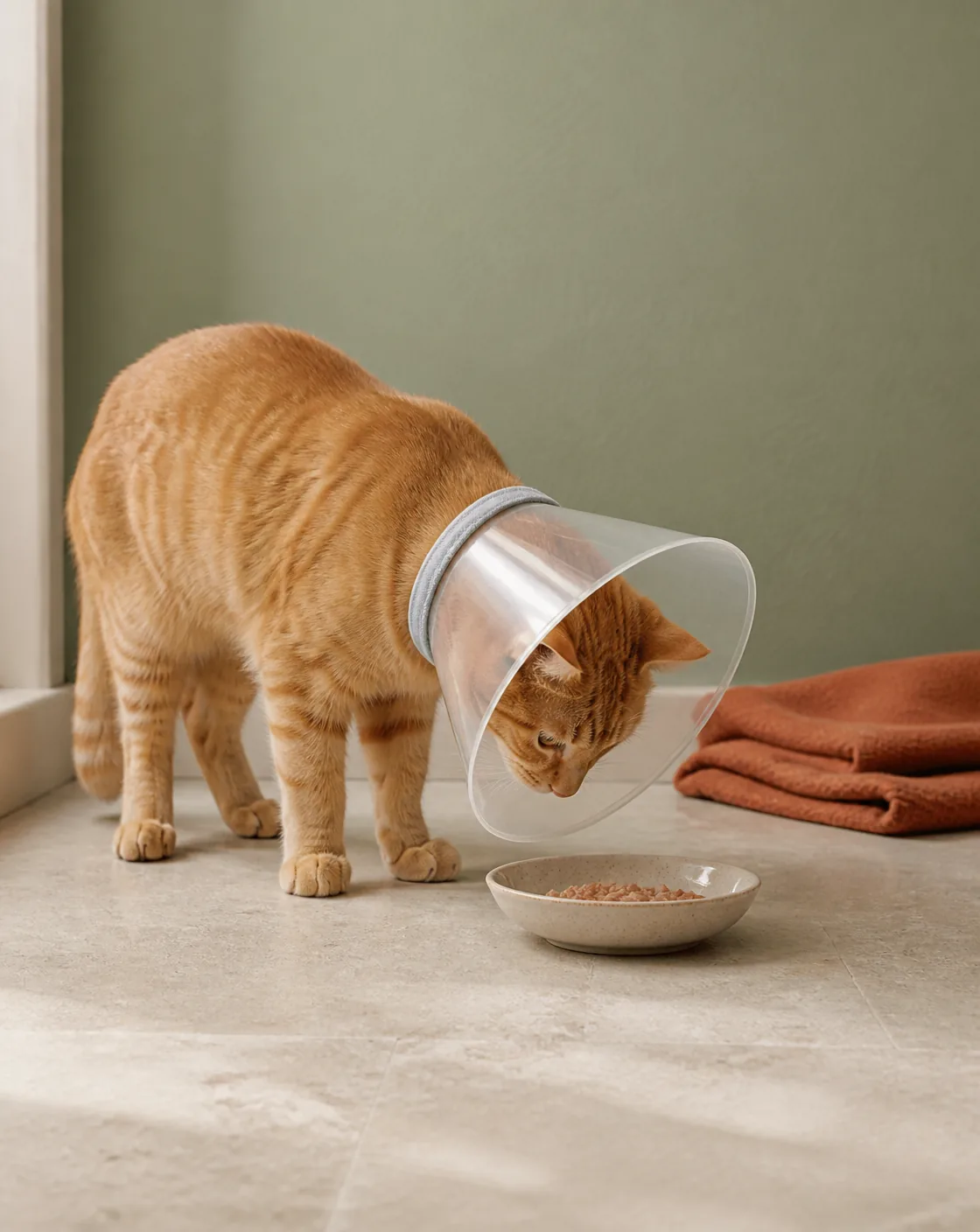
To help a cat eat with a cone, first check whether the rim blocks access to food or water. Try a suitable dish shape or position while keeping the cone on. Follow your vet's feeding instructions, and contact the clinic if your cat still cannot eat.
A cat can approach dinner and still fail to reach it. Another may have a clear route to the food but turn away. Those observations call for different conversations with the veterinary team. Neither proves that the cone is the only problem.
This guide is for arranging meals around the protection your vet prescribed. It does not diagnose appetite loss or replace discharge instructions. The photographs are AI-generated illustrations, not records of a recovering patient or a test of any collar.
Watch what happens before changing the setup
Stay nearby for a meal and watch from the side. Does the cone strike the dish or surrounding furniture before the mouth reaches the food? Can the cat approach without getting wedged into a corner? Does food move, or does the cat only sniff it?
VCA's cat collar guidance says eating and drinking should be possible with a properly fitted collar, although the first attempts can be cumbersome. That is a reason to check access, not a reason to dismiss repeated unsuccessful attempts.
Keep observations separate from explanations. “The rim hits the bowl before the mouth reaches the food” is useful information. “My cat is just being stubborn” is a guess. If the fit seems wrong or the collar causes irritation, ask the clinic to check it rather than trimming the rim yourself. Record which dish you tried and whether your cat could reach its contents.
How to help a cat eat with a cone: adjust the dish
VCA suggests changing the shape or elevation of food and water bowls. Some cats find a plate or saucer easier than a bowl. There is no single height or diameter in that guidance that works for every collar and cat.
Start with an accessible location on a stable surface. If the rim catches a deep bowl, try a shallower dish that the cat can reach while the cone remains in place. If you raise a dish, use a secure support and check that it does not wobble. Keep the meal accessible without requiring your recovering cat to jump.
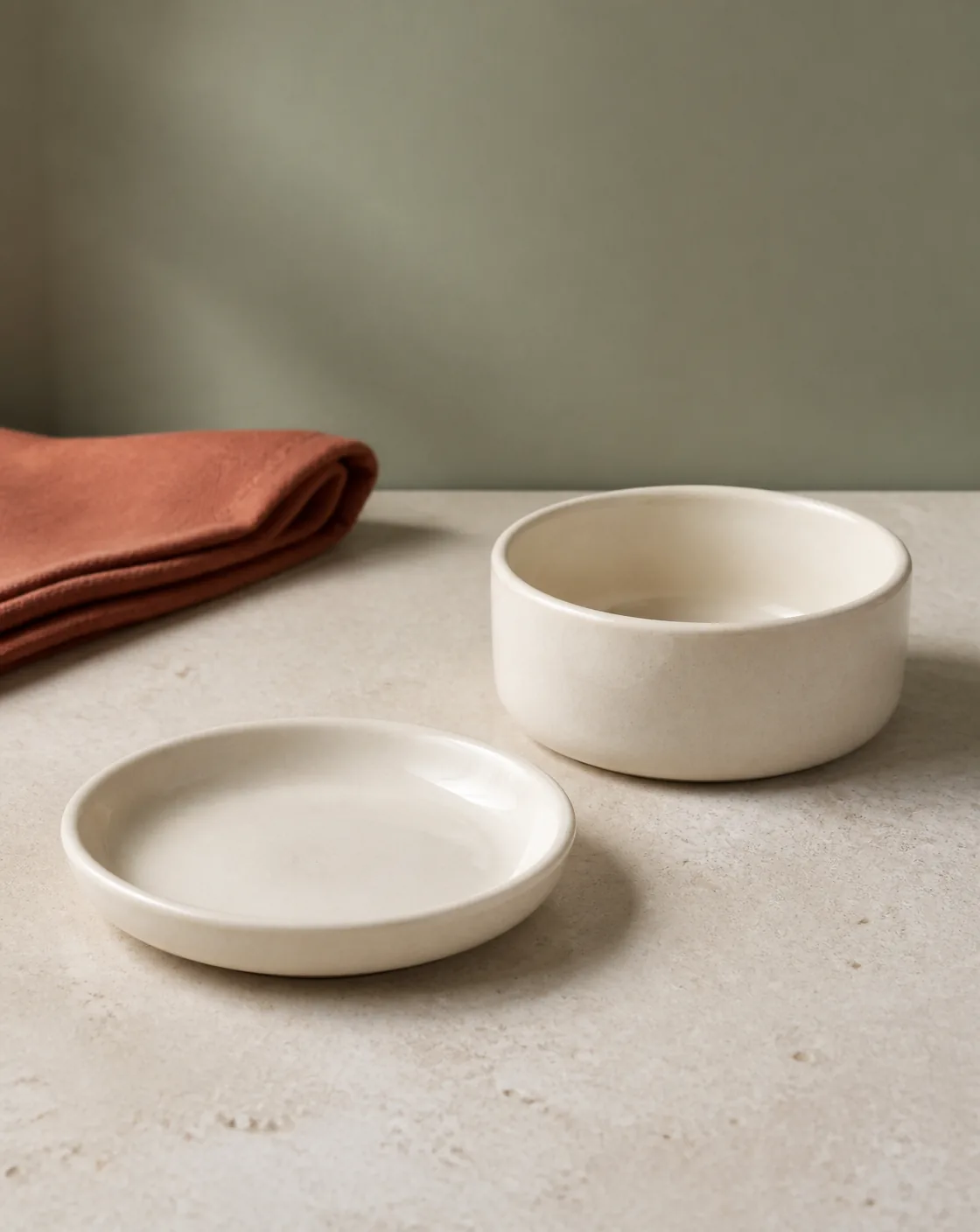
Change one part of the arrangement, then watch another attempt. A bowl that looks convenient to a person is not necessarily reachable through that particular cone. Treat the following as an observation checklist, not a diagnosis or a promise that new crockery will solve the problem.
| What you see | What to check next |
|---|---|
| The cone catches the bowl rim | Try a different dish shape and observe the clearance |
| The dish slides away | Put it on a stable, nonslip surface |
| Food is reachable but untouched | Report the appetite change rather than blaming bowl shape |
| Water is difficult to reach | Check water access separately and contact the clinic if drinking remains difficult |
Our feeding and care product range is a starting point for comparing designs, not proof that a particular item is suitable for your cat's recovery.
Keep the prescribed food plan in place
Changing access and changing the diet are separate decisions. PDSA's post-surgery guidance advises normal food in small, frequent meals unless the veterinary team has prescribed a special diet. Keep clean drinking water available.
Cats Protection discusses postoperative nausea and notes that cats after dental work may prefer softer food. Those general suggestions do not override instructions for a particular procedure, medical condition or prescribed diet. Ask the treating clinic before making a change that conflicts with the discharge sheet.
Write down what you offered and what was left. In a home with other pets, watch who actually eats it: an empty saucer alone cannot confirm the recovering cat had a meal. A short record is more useful than repeatedly topping up an unmeasured bowl. Note the meal time too, so another caregiver knows what has already been offered.
Ask before removing or replacing the cone
Advice about meal breaks needs its conditions attached. Cats Protection describes temporary removal with supervision and immediate replacement after meals. VCA is more cautious: removal is generally not advisable, and supervised breaks should follow the veterinarian's advice.
For your cat, use the plan from the clinic that knows the wound and why protection is needed. Ask directly: “May I remove this collar for meals, how should I supervise, and can you show me how to refit it?” If a break is approved, remain with the cat and replace the collar as instructed. Do not leave it off because one meal went well.
Soft cones, inflatable collars and recovery suits are not automatic substitutes. VCA advises discussing alternatives with the vet. A more convenient shape still has to protect the relevant area. Our dog cone sizing guide addresses a different animal; do not use its dog measurements to fit this cat.
When a bowl adjustment is not enough
PDSA advises contacting the vet if a cat refuses food for more than 24 hours after surgery or is vomiting. That is not an instruction to wait until the limit if your cat cannot drink, appears painful, deteriorates, or has a more urgent deadline in its discharge instructions. Call the clinic for guidance sooner when you are concerned.
Cats Protection also advises contacting the vet when a cat is eating very little after a day or so. “Still taking a lick” is worth recording, but it does not establish that intake is adequate. Explain what has actually been eaten and when.
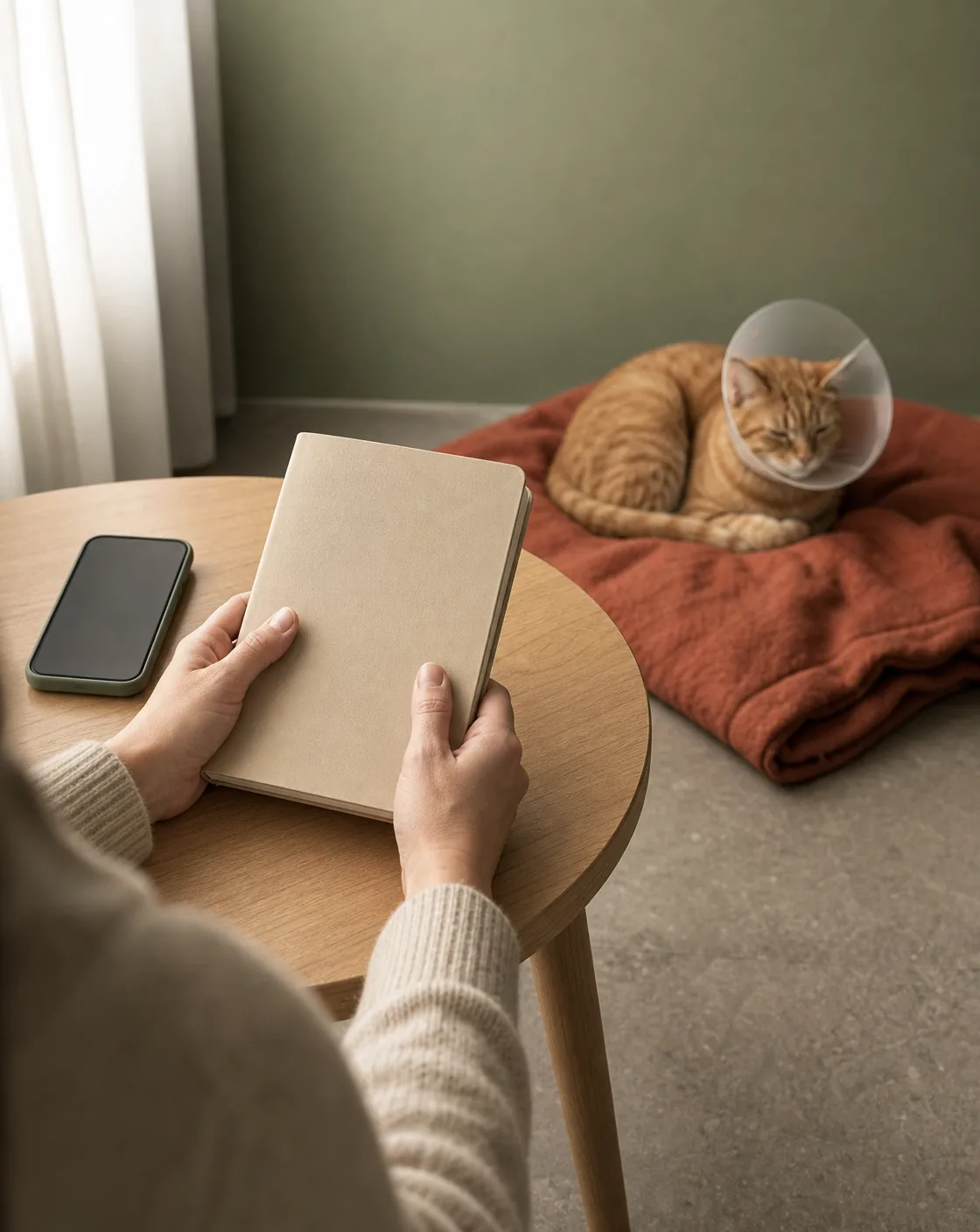
Have the discharge sheet and medication details beside you when you call. Describe attempts to eat, water access, vomiting if present, and any wound changes. If the clinic asks you to return, our cat veterinary-visit guide covers transport preparation; follow the clinic's recovery restrictions rather than starting extra training exercises.
Frequently asked questions
Can I cut the cone shorter so my cat can eat?
Do not shorten it yourself. The collar is there to prevent access to an injured or treated area. Ask the veterinary team to check fit and protection, and try an appropriate dish arrangement while waiting for their advice.
Is a shallow plate always better than a bowl?
No. VCA says some cats find a plate or saucer easier. Watch whether your cat can reach the food with its prescribed cone still in place. Dish shape, placement and stability all matter; no universal size is established here.
What if my cat still refuses food after I move the bowl?
Contact the clinic rather than continuing to swap dishes indefinitely. Report actual intake, the time of the last meal, and any symptoms. PDSA advises a call for refusal lasting more than 24 hours after surgery, or for vomiting; follow any earlier deadline your vet gave you.
The aim is a meal your cat can reach while its wound remains protected. Adjust the environment, observe the result and involve the treating team when access or appetite remains a problem.
Sources and editorial note
- VCA Animal Hospitals: Elizabethan Collars in Cats, by Courtney Barnes, Ryan Llera and Ernest Ward. Used for access, fit, supervision and alternative-collar guidance.
- Cats Protection: How to care for your cat after an operation. Used for feeding observations and the conditions around supervised collar removal.
- PDSA: How To Care For Your Cat After Surgery, published January 2023. General UK pet-care guidance, not procedure-specific instructions for every patient.
Prepared for XueQiu Pets Editorial with AI research and drafting assistance. Sources checked September 22, 2026; these are existing clinical-care resources, not new clinical trial results. This article has not been individually reviewed by a veterinarian. No personal treatment experience, measured recovery outcome or product endorsement is claimed. The dish observations are an editorial checklist, not a validated test of appetite or collar fit.