Editorial — Published 2026-10-01 — By Wangzian, Pet Lifestyle Curator
Why Won't My Puppy Use a Pee Pad Holder?
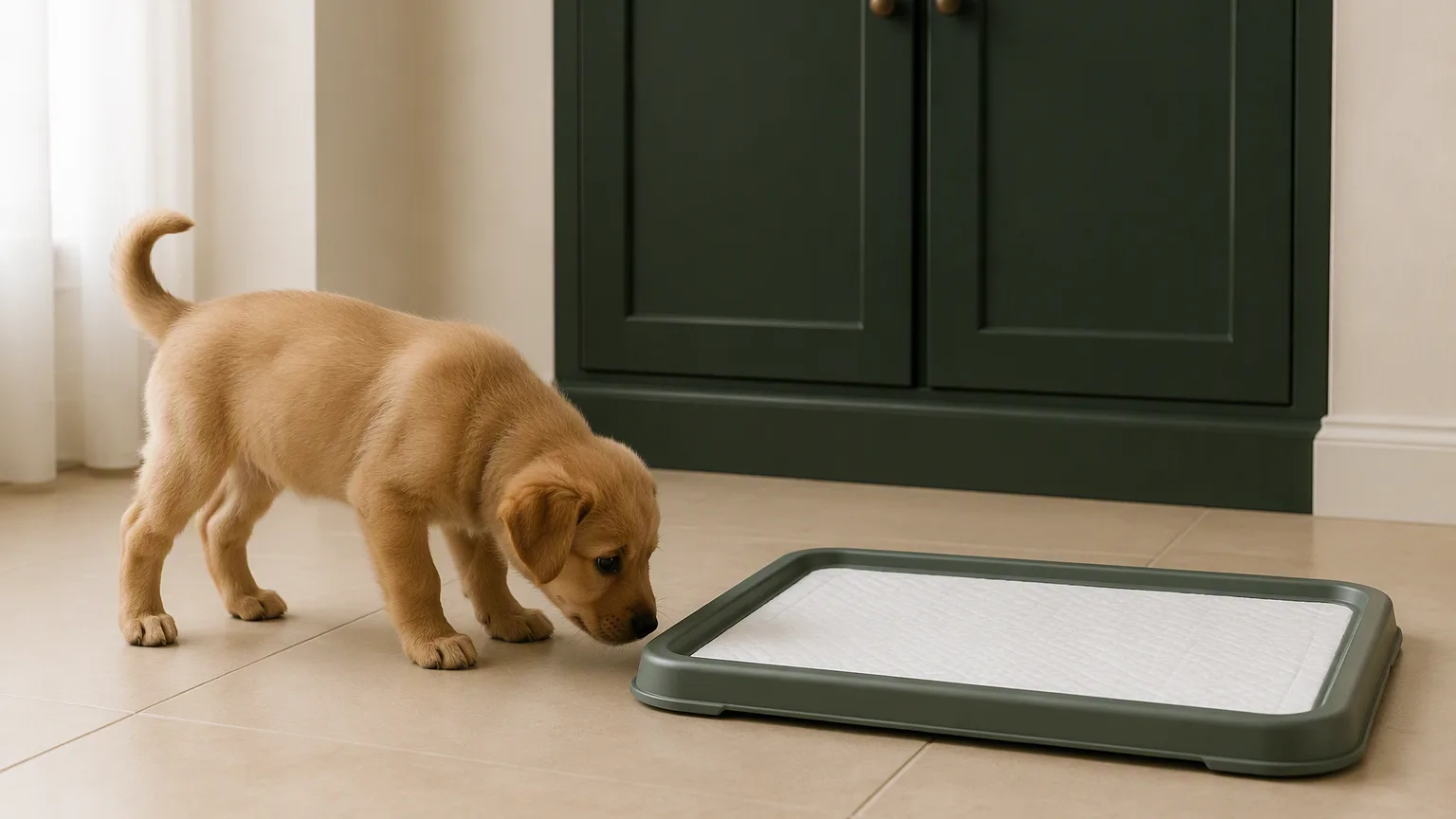
If your puppy won't use a pee pad holder, treat the holder as a change to the toilet setup: check access and footing, keep the location familiar, and supervise rewarded toilet trips. A sudden change also deserves a veterinary check, particularly if toileting looks uncomfortable.
By XueQiu Pets Editorial. This guide combines veterinary guidance with an attributed owner report, not our own training trial. Images are AI-generated illustrations of generic equipment.
When a puppy won't use a pee pad holder, check what changed
One owner described a striking change in a public puppy-training discussion. Their puppy, reported as 14 weeks old, had previously used a pad in a washroom. After a holder was introduced, the puppy began lying on the pad. The owner wondered whether it now looked like a bed. That is a firsthand owner account, not a diagnosis or evidence that holders confuse every puppy. The thread does not establish which change caused the problem.
Start with a before-and-after inventory. Did you add a raised edge, cover the absorbent pad with a grid, move the station, change pad brands, or alter the route through a gate? These are different changes. An open-frame holder leaves the pad exposed; a grid-top tray changes the surface beneath the paws. Treating them as interchangeable hides useful clues.
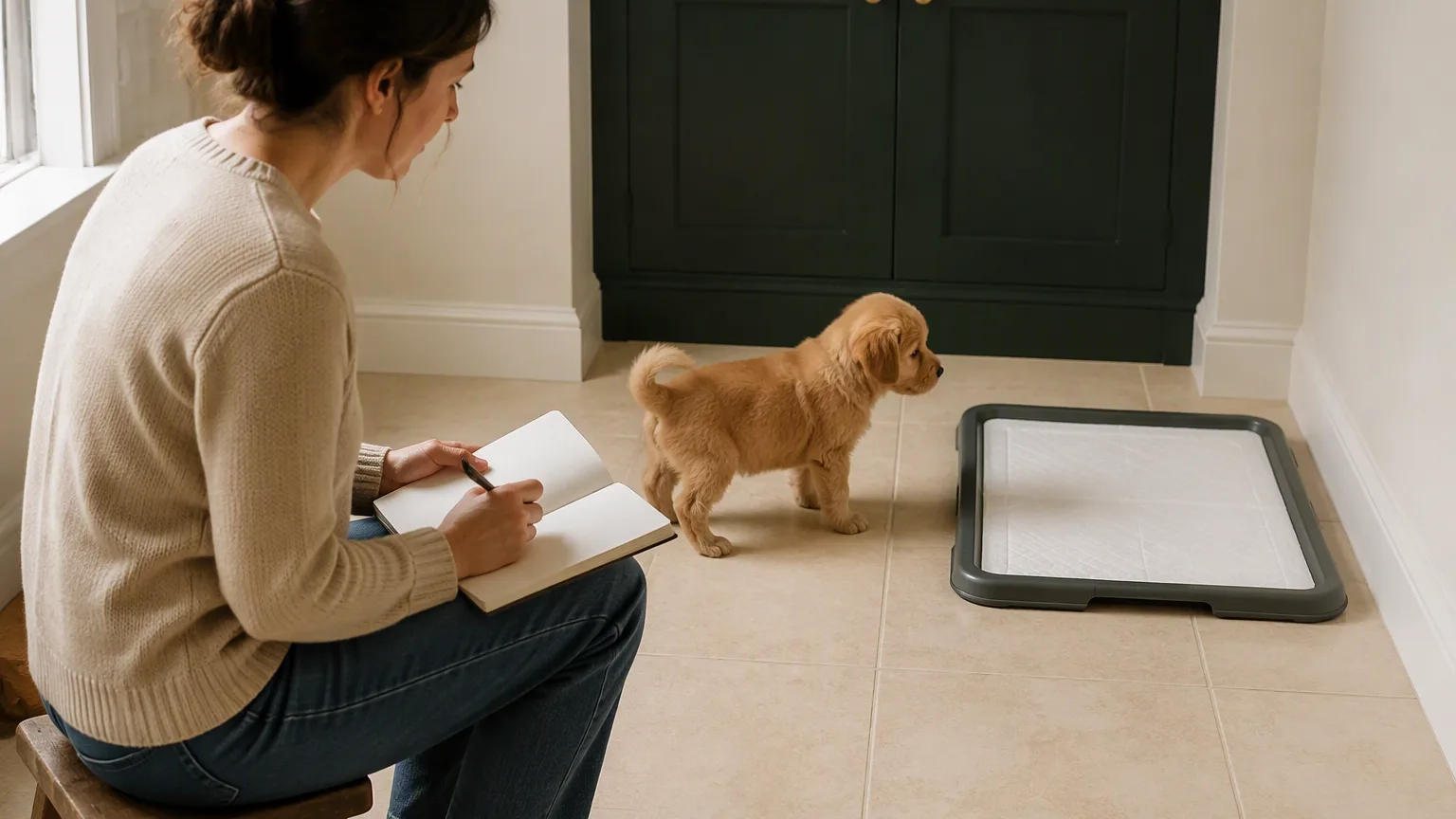
Watch from the side without lifting the puppy onto the equipment. Does the puppy approach, pause at the rim, step on and back away, or settle down? Record what happened rather than calling the puppy stubborn. Check that the assembled holder does not rock or slide, the pad lies flat, and the approach is clear. Stop using damaged equipment or anything that catches a paw.
Reintroduce the toilet station without creating a contest
VCA's house-training guide supports a designated elimination area, close supervision and rewards. It does not provide a tested pee-pad-holder conversion timetable. The following checks apply those principles to a changed station; they are an editorial troubleshooting plan, not a guaranteed training protocol.
Keep the established toilet location and route where practical. If the previously used pad setup was safe and the puppy was not chewing or swallowing it, returning temporarily to that familiar setup can help you observe whether the new hardware is part of the difficulty. Do not dismantle a holder into an arrangement the manufacturer does not permit. If an exposed pad is unsafe, ask your veterinarian or a qualified reward-based trainer for an alternative.
Separate calm exploration from an urgent toilet trip. Let the puppy inspect intact equipment voluntarily when it is not desperate to eliminate. For actual toilet trips, supervise and reward successful elimination at the designated location. Avoid dragging, holding the puppy in place, or waiting indefinitely for it to surrender. Keep a separate resting space available if the toilet area has become a sleeping spot.
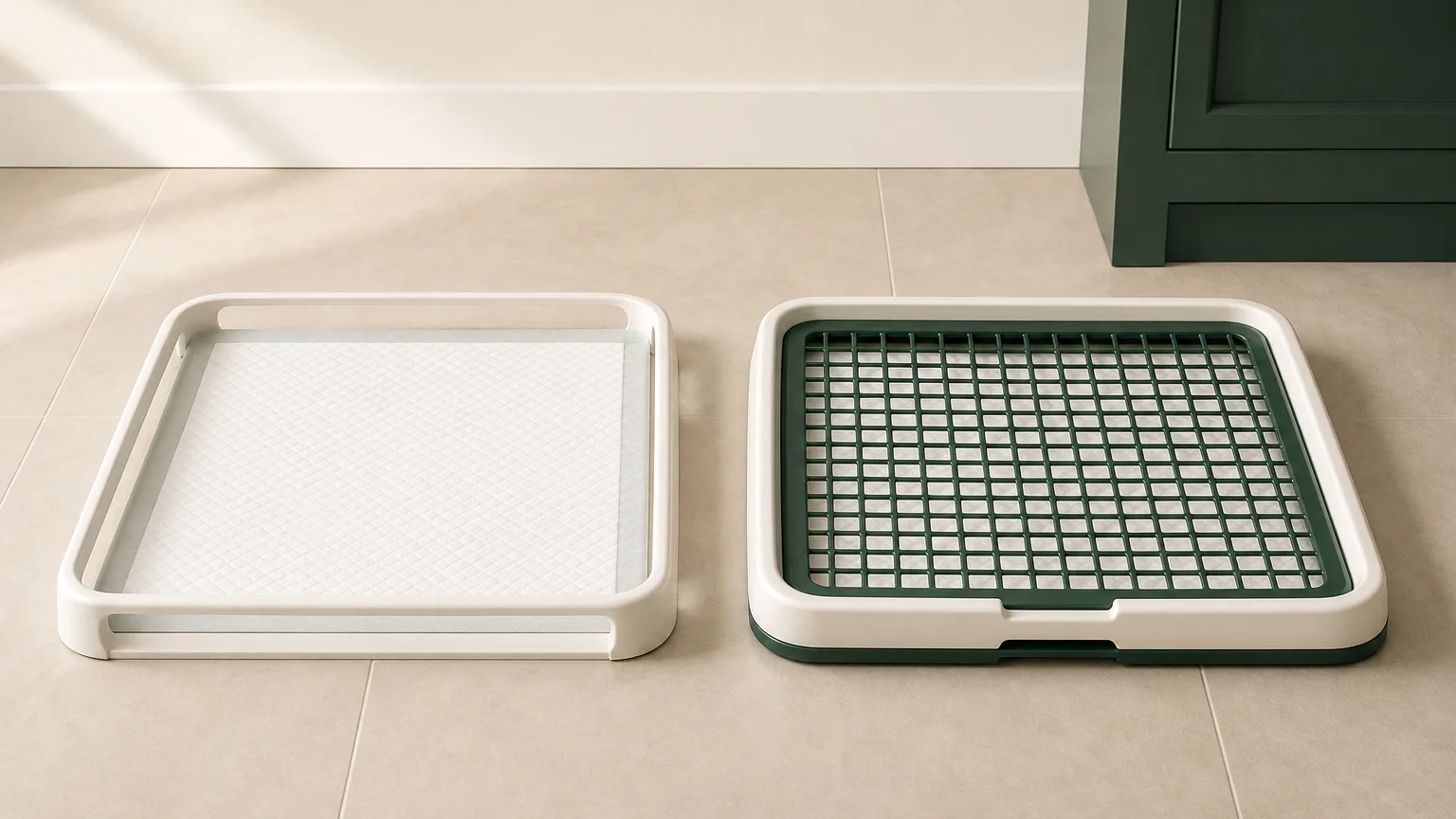
Equipment note: our catalogue includes a raised-mesh dog toilet tray. That is a different category from a simple open-frame holder. We have not tested whether our tray solves refusal, prevents chewing, or suits a particular puppy's paws. Check the actual construction and care instructions before comparing our pet-care products.
Keep the routine; record the response
A new tray does not remove a young puppy's need for frequent opportunities. VCA advises toilet breaks after waking, meals or a large drink, every half hour during high-energy play, and every 1–2 hours while awake in addition to those occasions. These are opportunities to offer, not a promise about bladder capacity. Follow your veterinary team's advice for your puppy.
The same guide describes waiting a few minutes during outdoor training; if nothing happens after five minutes, return indoors and supervise closely before trying again at the first sign of restlessness. It does not establish a universal five-minute limit for indoor holders. The useful principle here is to avoid a prolonged standoff and stay attentive to the next signal.
Make a simple record with these fields:
| What to record | Why it helps |
|---|---|
| Waking, eating or play before the trip | Connects opportunities to the puppy's routine |
| Pad exposed or covered by a grid | Separates two different surfaces |
| Approach, step-on, lie-down or elimination | Distinguishes access from successful toileting |
| Location of an accident and any discomfort | Gives the veterinary team useful context |
Reward after the puppy finishes, while still beside the toilet area. Quiet praise and a small treat make the rewarded behavior clear. If you discover an accident later, clean it calmly; VCA specifically advises against punishment. Use an appropriate enzymatic cleaner according to its label and the surface instructions, rather than mixing household chemicals.
Know when the holder is no longer the main question
If a previously reliable puppy starts having accidents, do not assume the timing proves the holder caused them. VCA's house-soiling guidance describes incomplete training, physical illness, behavioral illness and marking as distinct possibilities. Pain during elimination and illnesses that increase urine volume can change how frequently a dog needs an appropriate toilet location. A new purchase and a health problem can occur together.
Contact your veterinarian about a sudden house-training lapse, especially when elimination appears painful or the puppy's drinking and urination patterns change. Share the notes rather than deciding from a single successful trip that illness is excluded. If your puppy is distressed or seems unable to urinate, seek urgent veterinary advice instead of continuing equipment experiments.
There is no verified day count for accepting every holder, and buying a second tray is not a substitute for understanding the first one. For a household with cats as well, our cat litter-box transition guide covers a separate, cat-specific situation; its details should not be transferred to puppies. If care equipment is also being used after a procedure, follow the treating clinic's instructions. Our dog cone sizing guide addresses that different fit question.
Common questions before trying again
Should I remove the holder and use the old pad?
Only consider the previous setup if it was safe, supervised and did not involve chewing or swallowing pads. Keep the location familiar and observe the response. Do not improvise an unsafe partly dismantled holder. If exposed pads are a problem, ask your veterinary team or a qualified trainer for a safer option.
Does lying on the pad mean my puppy thinks it is a bed?
Not necessarily. Lying down is an observation, not proof of what the puppy understands. Check access, surface changes, the separate resting area and the timing of toilet opportunities. Reward successful toileting, and discuss a sudden lapse with your veterinarian rather than assuming the puppy has forgotten everything.
How long should a puppy take to accept a pad holder?
There is no universal timetable established by the sources here. Follow the puppy's behavior and record actual toileting, not just willingness to step onto a tray. If your puppy won't use a pee pad holder, keep the safe routine consistent and seek help when discomfort or repeated setbacks persist.
Sources and preparation
- VCA: House Training for Puppies and Dogs, by Ellen Lindell and Monique Feyrecilde. Designated toilet areas, supervision, break opportunities, reward timing and avoiding punishment. Full page read October 1, 2026; no publication date displayed.
- VCA: Dog Behavior Problems: House Soiling, by Ellen Lindell, Debra Horwitz and Gary Landsberg. Medical and behavioral distinctions and keeping a training journal. Full page read October 1, 2026; no publication date displayed.
- Owner report: a puppy stops using its pad after setup changes. The post was displayed as one year old when read. It illustrates a question, not a representative sample or treatment result.
AI assisted research and drafting. XueQiu Pets has not conducted a holder comparison trial or assessed the puppy in that report. The table is an editorial observation aid. This article cannot diagnose an individual animal.