Editorial — Published 2026-08-20 — By Wangzian, Pet Lifestyle Curator
How Long Does It Take a Cat to Accept a New Litter Box? In One Study, No Adjustment Period Appeared at All
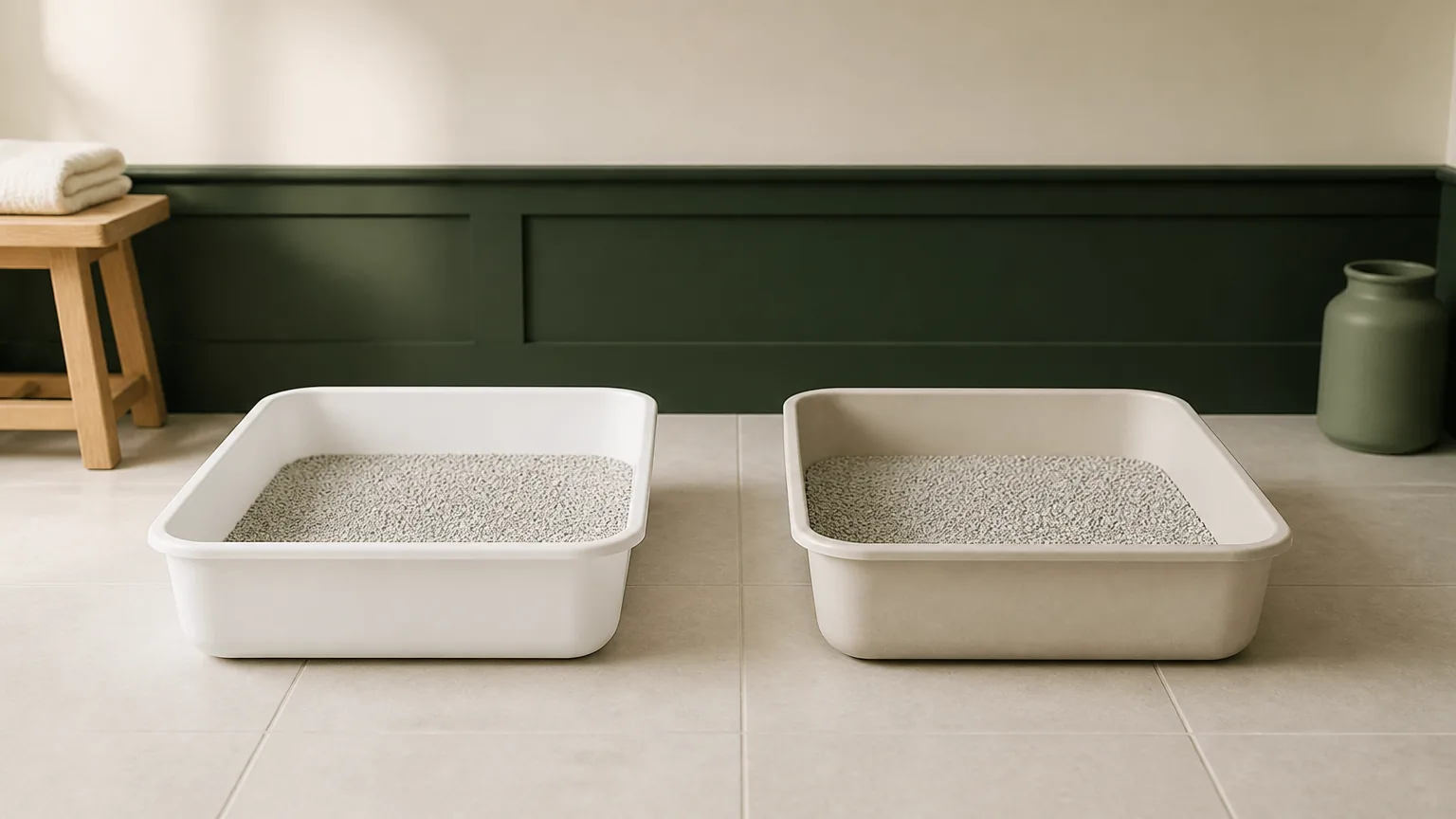
Most healthy cats use a new box immediately, and the popular "3 to 7 days" figure describes a cautious owner's transition schedule rather than anything measured in a cat. In a 2017 preference study, sixteen cats were handed unfamiliar boxes every day for four days and not one accident was recorded.
That is a strange answer to a question people ask constantly, so it is worth being precise about what was and was not observed.
The study that accidentally answered this question
Ellis, McGowan and Martin published a set of preference experiments in Behavioural Processes in 2017. They were not investigating adjustment time. They wanted to know whether a box already used by another cat becomes less appealing.
The design put each cat alone in an enclosure with two litter boxes, four days per question, with the boxes swapped left-to-right on an A/B, B/A, B/A, A/B pattern so that side preference could not be mistaken for box preference. Sixteen cats per question. Uncovered boxes, 61.0 × 48.3 × 25.4 cm, unscented clumping clay.
Across every one of those days the cats were meeting boxes they had not chosen, in configurations that changed daily, some containing another cat's urine and faeces, some containing saline clumps, some containing gelatin logs shaped to imitate faeces.
Buried in the results section is one sentence that has nothing to do with the paper's thesis:
> No out-of-box elimination was exhibited at all during the study.
Zero. Not one cat, on any day, declined to use what was in front of it.
Why that sentence needs a caveat before you trust it
These were not typical household cats, and the paper is clear about it.
Every cat was born and raised at the Nestlé Purina Pet Care facility in Missouri. All three authors work in the Behavior and Welfare Section of Nestlé Purina Research. The inclusion criteria specifically excluded cats that regularly eliminated outside the box.
So the sample was: purpose-bred, facility-housed, already habituated to routine changes, and pre-screened for the exact problem being counted. A population less likely than any other to have an accident.
What the zero does establish is narrower but still useful. Novelty of the box itself is not, on its own, a barrier to use. A cat that is otherwise settled will step into an unfamiliar box and use it. When a real cat refuses a new box, something other than unfamiliarity is doing the work.
What actually put cats off
The same study isolated the variables, and the results run against the standard explanation.
| What was in the box | Effect on preference |
|---|---|
| Another familiar cat's urine and faeces | Avoided — cats chose the clean box |
| Whose waste it was (own vs. another cat's) | No effect |
| Urine odour alone (1 ml, no clumps) | No effect |
| Faecal odour alone (1 ml slurry) | No effect |
| Both odours together | No effect |
| Odourless saline clumps | Avoided |
| Odourless gelatin logs | Avoided |
To separate smell from physical obstruction, the researchers had to build both halves separately. Odour without bulk was 1 ml of a familiar cat's urine, or 1 ml of a 2:1 water-and-faeces slurry — enough to smell, too little to clump. Bulk without odour was saline solution and unflavoured Knox gelatin, moulded in silicone into logs 7.25 inches long and half an inch wide.
The smell changed nothing. The lumps changed everything.
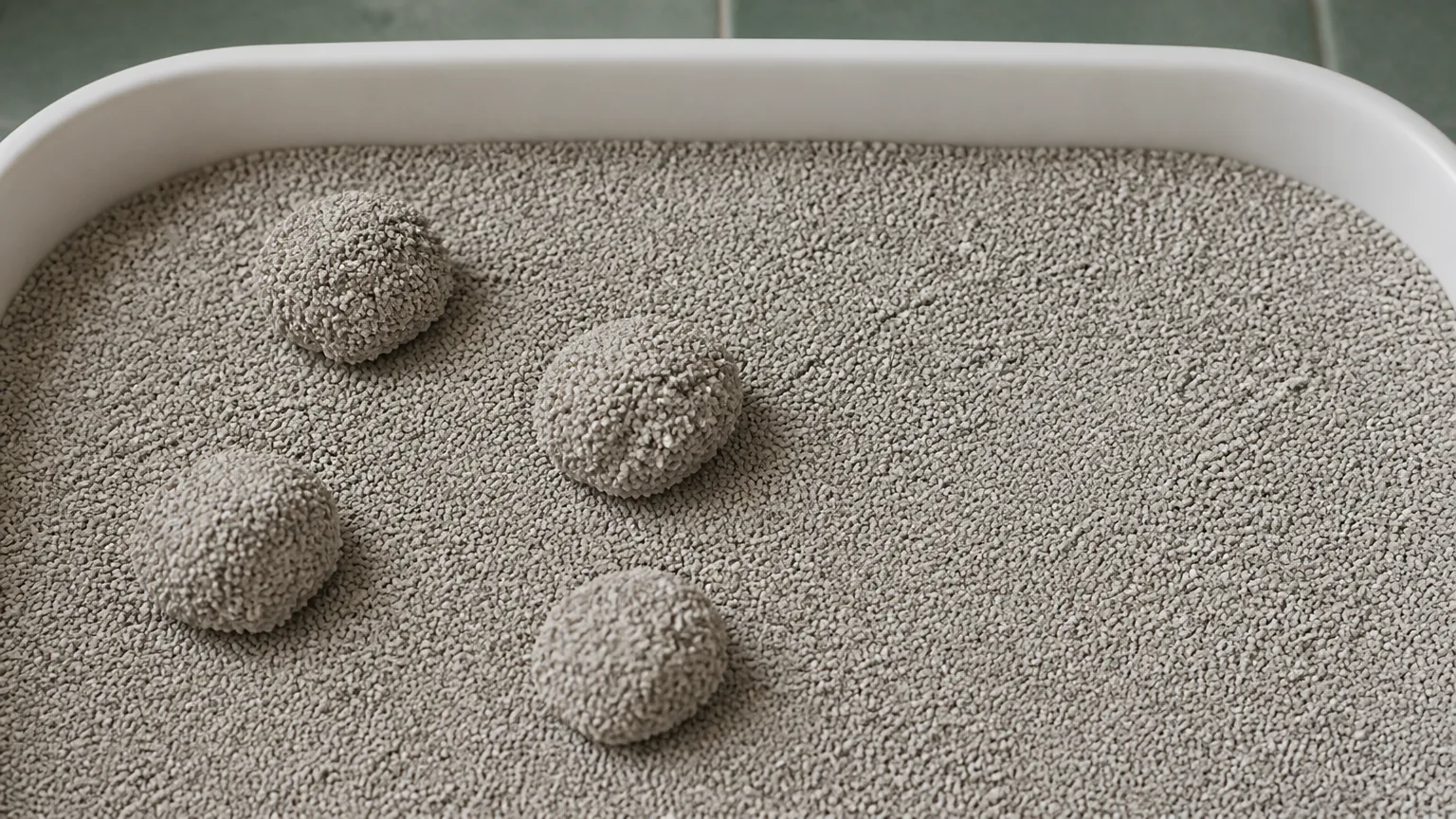
There is a caveat here too: the study recorded only whether a cat eliminated in a box on a given day, not how many times. Preference was measured as a yes-or-no per day, which is a blunter instrument than a count.
One further detail is worth keeping. When the choice was between a box with faux-urine clumps and a box with faux-faecal logs, cats preferred to go in the box with the logs — whether urinating or defecating, at the one-cat volume and at the three-cat volume. Clumps of used litter appear to be more off-putting than solid obstructions.
And in the single case where the obstruction was small enough — a clean box versus a box holding just one gelatin log — cats showed no significant preference for where to defecate. One small obstruction was tolerable. Scale mattered.
So why does my cat refuse the new box?
If unfamiliarity alone does not explain refusal, the plausible causes are the ones that were controlled out of this study. The two that carry the strongest evidence on this site are size and litter type.
We covered the 78-cat trial on dimensions in does litter box size matter for cats, including the finding that a 60 cm box beat a 50 cm box by exactly one use — the returns flatten early. That article also documents something relevant here: the cat café's own boxes were used least of all, at 11.7%, despite already meeting the 50 cm standard. The authors attributed it to the litter, not the box.
Which is the point. If you bought a new box and also switched litter at the same time, you have changed two variables and the box is probably taking the blame.
Number and spacing are a separate question, and the evidence there is weaker than most advice implies — we went through the 421-owner dataset in how far apart should litter boxes be.
What to do, in the order the evidence supports
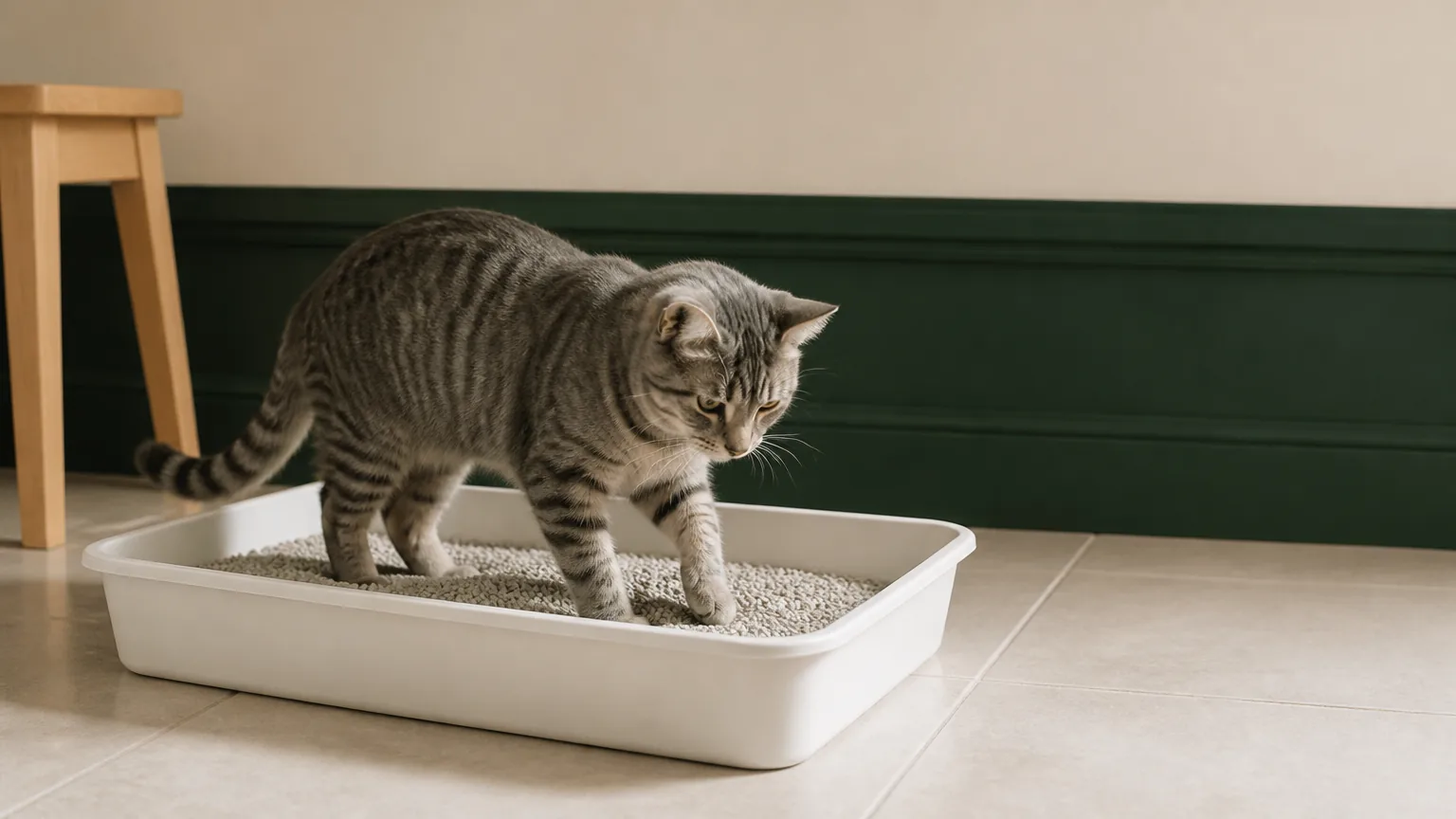
- Change one thing at a time. New box with the old litter, transferred across. If you want to change litter too, do it a week later.
- Keep the old box available. Nothing in this research suggests removing it helps, and running both costs you nothing but floor space.
- Scoop the new box more often than feels necessary. Physical obstruction was the only factor that moved the needle, and it is the one entirely within your control.
- Do not rely on odour control to fix refusal. Neither urine nor faecal odour affected preference in this study. A deodorising spray addresses your nose, not the cat's decision.
- If refusal lasts beyond a few days, stop treating it as a box problem. Persistent house-soiling has medical causes worth excluding first.
That last point deserves weight. The paper's own introduction cites two findings about the stakes: out-of-box elimination is the leading behavioural reason owners surrender cats to shelters, and once in a shelter, behavioural problems — primarily this one — are the leading behavioural reason cats are selected for euthanasia. Both are second-hand citations we have not read in full, so treat them as context rather than as our own verified figures. They still frame why guessing at this problem is a poor idea.
Where the honest gaps are
Nobody has measured this directly. There is no study that takes ordinary household cats, introduces a new box, and times acceptance. The zero-accident result above is a by-product of a study asking a different question, in a population selected to not have the problem.
The numbers circulating online have no visible source. Three days, seven days, one to two weeks, three weeks — the figures in the top search results contradict each other and none cite a measurement.
Refusal and near-miss soiling are not the same failure. A cat that ignores a new box is a different case from one that goes a metre away from an established box, and the second turns out to be common: in a survey of 3,106 cats, 28.25% of indoor soiling happened right beside the tray. That pattern, and what it says about the location rather than the box, is in where to put a litter box in a small apartment.
We do not sell litter boxes. There is no product recommendation at the end of this article because there is nothing in our range to recommend. The closest thing we make is a lidded cat litter waste bin, which handles what you scoop rather than what the cat sits in. If you came here expecting a box recommendation, we do not have one.
For a case where the research is similarly thin but the advice is similarly confident, why does my cat ignore the scratching post works through the same problem in a different category — three quarters of homes with scratch damage already owned a scratcher.
---
Sources
- Ellis JJ, McGowan RTS, Martin F (2017). Does previous use affect litter box appeal in multi-cat households? Behavioural Processes 141(Pt 3):284-290. DOI 10.1016/j.beproc.2017.02.008. Open access under CC BY-NC-ND, full text read. Sixteen cats per research question, four-day preference tests, cats born and raised at the Nestlé Purina Pet Care facility, Missouri. All three authors are employed by the Behavior and Welfare Section of Nestlé Purina Research. Cats with existing elimination problems were excluded by design.
- Iwabuchi-Inoue Y, Hattori Y, Kikusui T (2025). Litter box size and litter type preference and their associated behavioural changes in cats. J Vet Med Sci 87(6):614-620 — covered in full in the linked size article and not restated here.
- de Azevedo CS et al (2026). Multifactorial drivers of house-soiling behaviour in domestic cats. Applied Animal Behaviour Science — covered in full in the linked spacing article and not restated here.
What we do not claim: we hold no data of our own on litter box acceptance, and no study we could find measures how long an ordinary cat takes to accept a new box. The zero-accident figure above describes sixteen research-facility cats screened for the absence of elimination problems, not a general population. Nothing here is veterinary advice. Sudden changes in elimination, especially straining, blood, or going outside the box after months of reliable use, warrant a vet rather than a new box.
Related reading
- Does Litter Box Size Matter for Cats? A 78-Cat Study Says Yes — With One Catch
- How Far Apart Should Litter Boxes Be? A 421-Owner Study Says You Are Asking the Wrong Question
- Why Does My Cat Ignore the Scratching Post? Three Quarters of Damaged Homes Already Own One