Editorial — Published 2026-07-18 — By Wangzian, Pet Lifestyle Curator
Dog Cooling Mat Guide: How to Keep Your Dog Cool in Summer
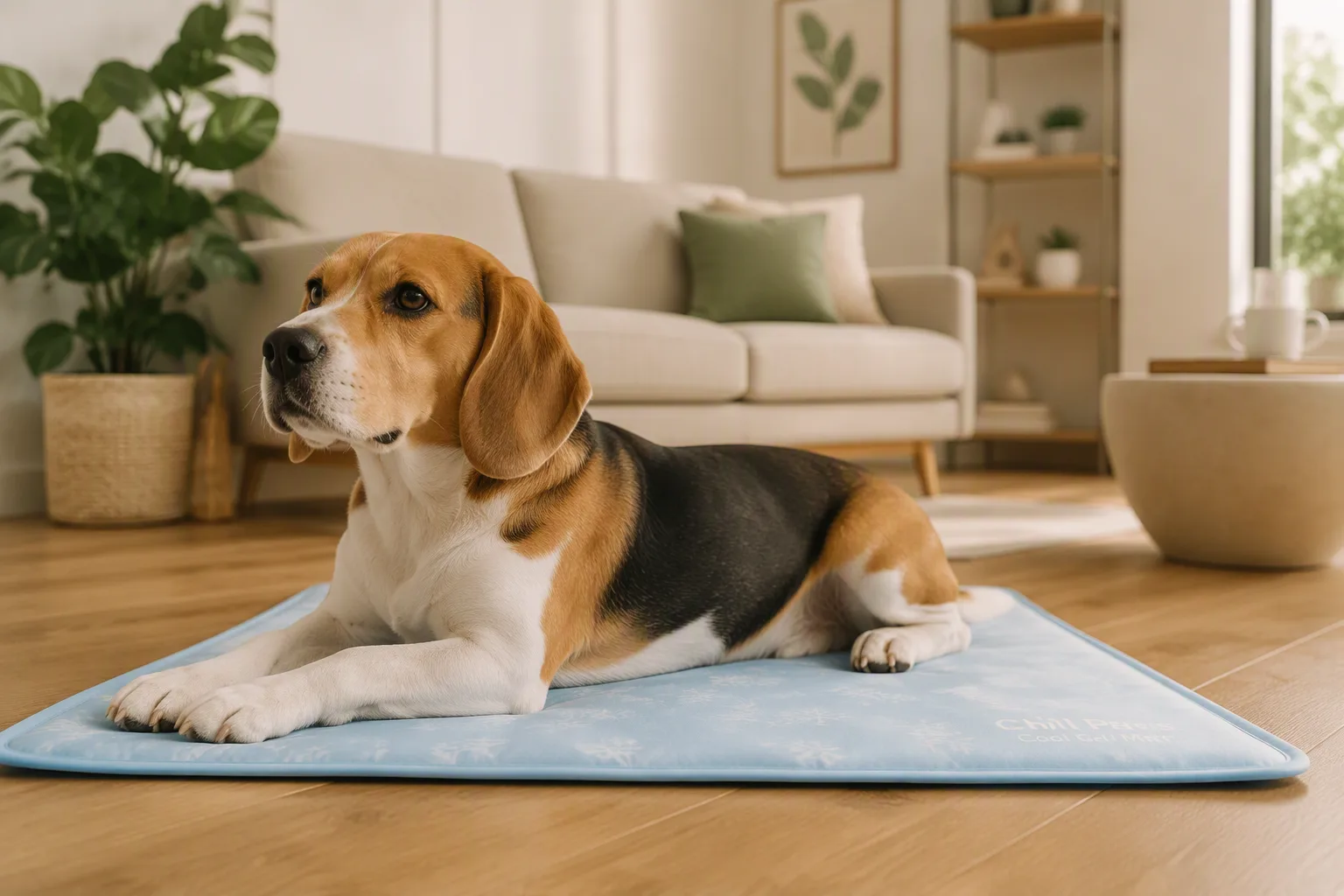
Last July, our office beagle Mango refused to leave the tile floor for three straight days during a 38°C heatwave. That week we tested four types of dog cooling mat side by side — pressure-activated gel, water-filled, elevated mesh, and phase-change material (PCM) — and logged surface temperatures every hour with an infrared thermometer. This guide shares what actually worked, so you can pick the right mat before the next heatwave instead of during it.
Why dogs overheat faster than you think
Dogs release heat mainly through panting and the pads of their paws — they barely sweat. According to the American Veterinary Medical Association (AVMA), flat-faced breeds such as Bulldogs and Pugs, overweight dogs, and seniors are at the highest risk of heat stress. Once the ambient temperature passes a dog's body temperature, panting alone stops being enough.
A cooling mat works by pulling heat away from the dog's belly and chest — the two areas with the thinnest fur. That direct contact matters more than air conditioning the whole room, because it cools the dog where heat exchange is most efficient.
The 4 types of dog cooling mat compared
1. Pressure-activated gel mats
The most common type on the market. The gel absorbs body heat on contact and re-chills itself after 15–20 minutes of non-use — no fridge, no water, no power.
- In our test: surface stayed 5–7°C below room temperature for the first 30 minutes of continuous lying, then gradually equalized.
- Best for: indoor use, crates, car seats, dogs under 40 kg.
- Watch out for: chewers. If your dog punctures the mat, the gel — even when labeled non-toxic — should never be ingested. Retire a punctured mat immediately.
2. Water-filled mats
You fill them like a slim water bed. Water holds cold longer than gel if you pre-chill it.
- In our test: pre-chilled with tap water, it stayed cool roughly twice as long as the gel mat, but it weighs several kilograms once filled and can leak at the valve.
- Best for: large breeds and dogs that lie in one spot for hours.
3. Elevated mesh cots
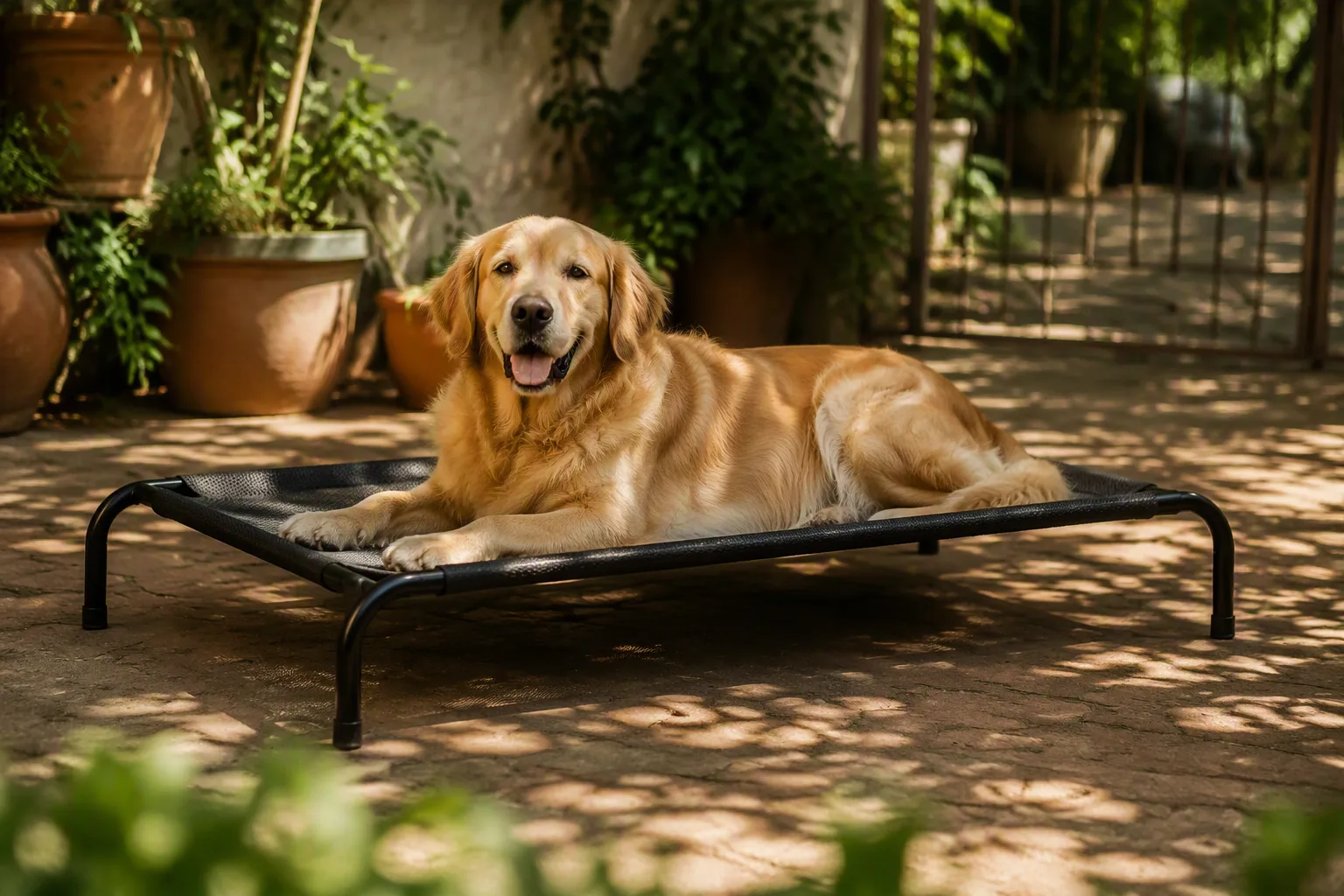
Not a mat in the strict sense, but often the better answer outdoors. Airflow under the mesh carries heat away continuously.
- In our test: Mango's resting breathing rate outdoors was visibly calmer on the mesh cot than on the gel mat placed on hot ground.
- Best for: balconies, gardens, kennels, humid climates.
4. Phase-change material (PCM) mats
- PCM plates lock at a fixed temperature (usually 22–28°C) and feel consistently cool without ever being cold enough to harm joints.
- Best for: senior dogs, post-surgery recovery, and owners worried about "too cold" surfaces.
- Trade-off: highest price per square centimeter of the four types.
How to choose the right size
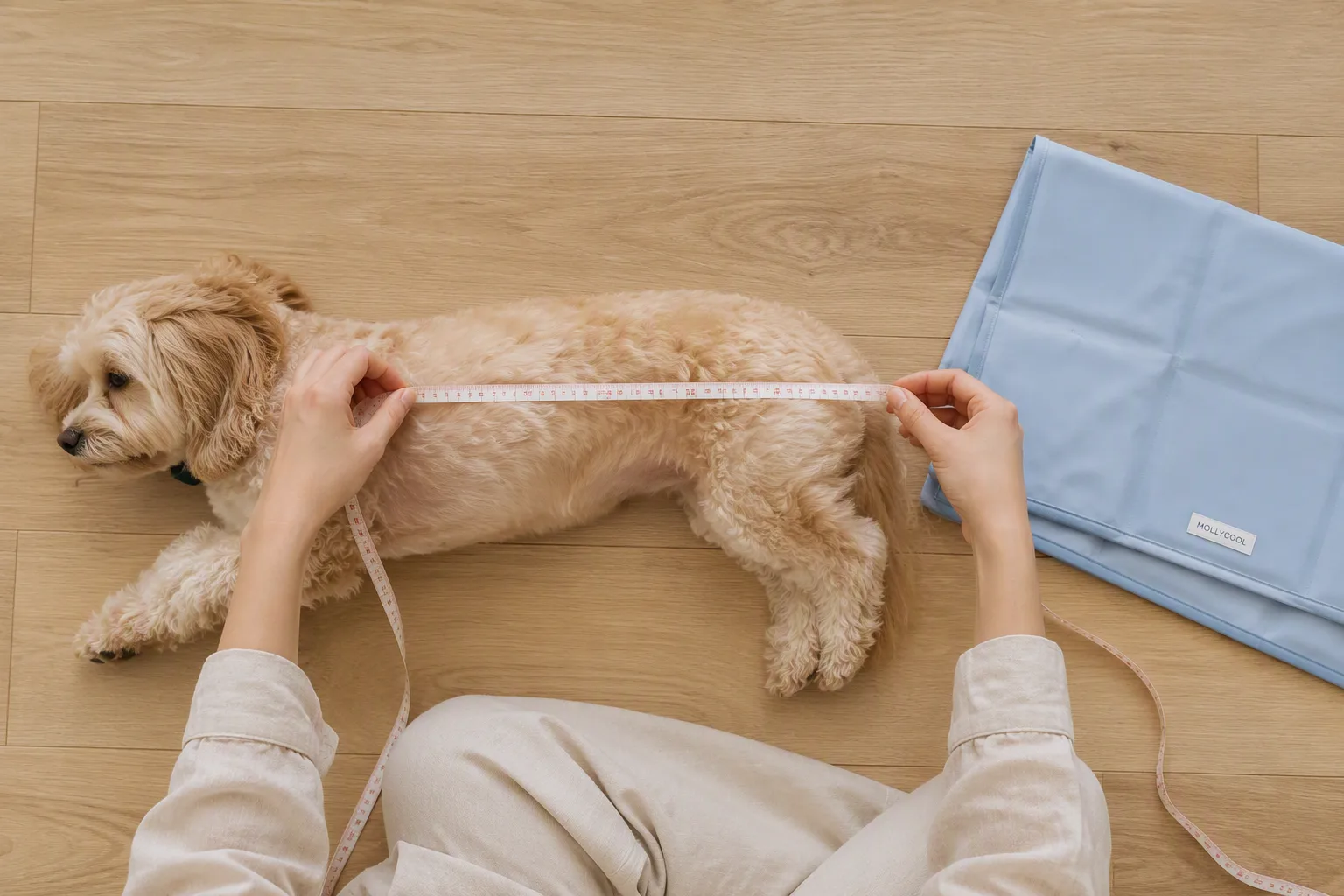
A simple rule from our testing: measure your dog from nose to tail base while lying flat, then add 15 cm. The dog's whole torso — not just the hips — must fit on the mat, or the cooling effect drops sharply. When in doubt, size up; an oversized dog cooling mat has no downside except floor space.
| Dog weight | Recommended mat size |
|---|---|
| Under 10 kg | 40 × 50 cm |
| 10–25 kg | 50 × 65 cm |
| 25–40 kg | 60 × 90 cm |
| Over 40 kg | 70 × 110 cm or water-filled |
5 safety rules most owners skip
- Inspect weekly for punctures. Run your palm across the surface; any sticky spot means gel is escaping.
- Never freeze a gel mat unless the manufacturer explicitly allows it — freezing breaks the gel's re-chilling cycle.
- Give an exit option. Place the mat where your dog can leave it freely. Dogs self-regulate; trapped cooling can overcool small breeds.
- Pair it with water. A cooling mat lowers skin temperature but does not rehydrate. Keep the water bowl within sight of the mat.
- Know the emergency signs. Heavy drooling, bright-red gums, and wobbling are heatstroke signals — a mat is not a treatment. Contact a vet immediately.
Cleaning and storage
Wipe gel and PCM mats with a damp cloth and mild soap — never machine-wash them. Water mats should be emptied and air-dried before storage to prevent mold at the valve. Store all mats flat or loosely rolled; sharp folds create weak points that fail a season later.
The bottom line
If you need one recommendation: for most indoor dogs, a pressure-activated gel dog cooling mat is the best balance of price, convenience, and cooling power. Go water-filled for giant breeds, elevated mesh for outdoor time, and PCM if your dog is senior or recovering. Whichever you choose, buy it before summer peaks — in our experience, the dogs that struggled most were the ones whose owners waited for the first heatwave to act.
Sources referenced: American Veterinary Medical Association (avma.org) heat-safety guidance for pets; manufacturer care instructions from tested products.