Editorial — Published 2026-07-18 — By Wangzian, Pet Lifestyle Curator
Signs of Heatstroke in Dogs: What I Watch For After One Close Call
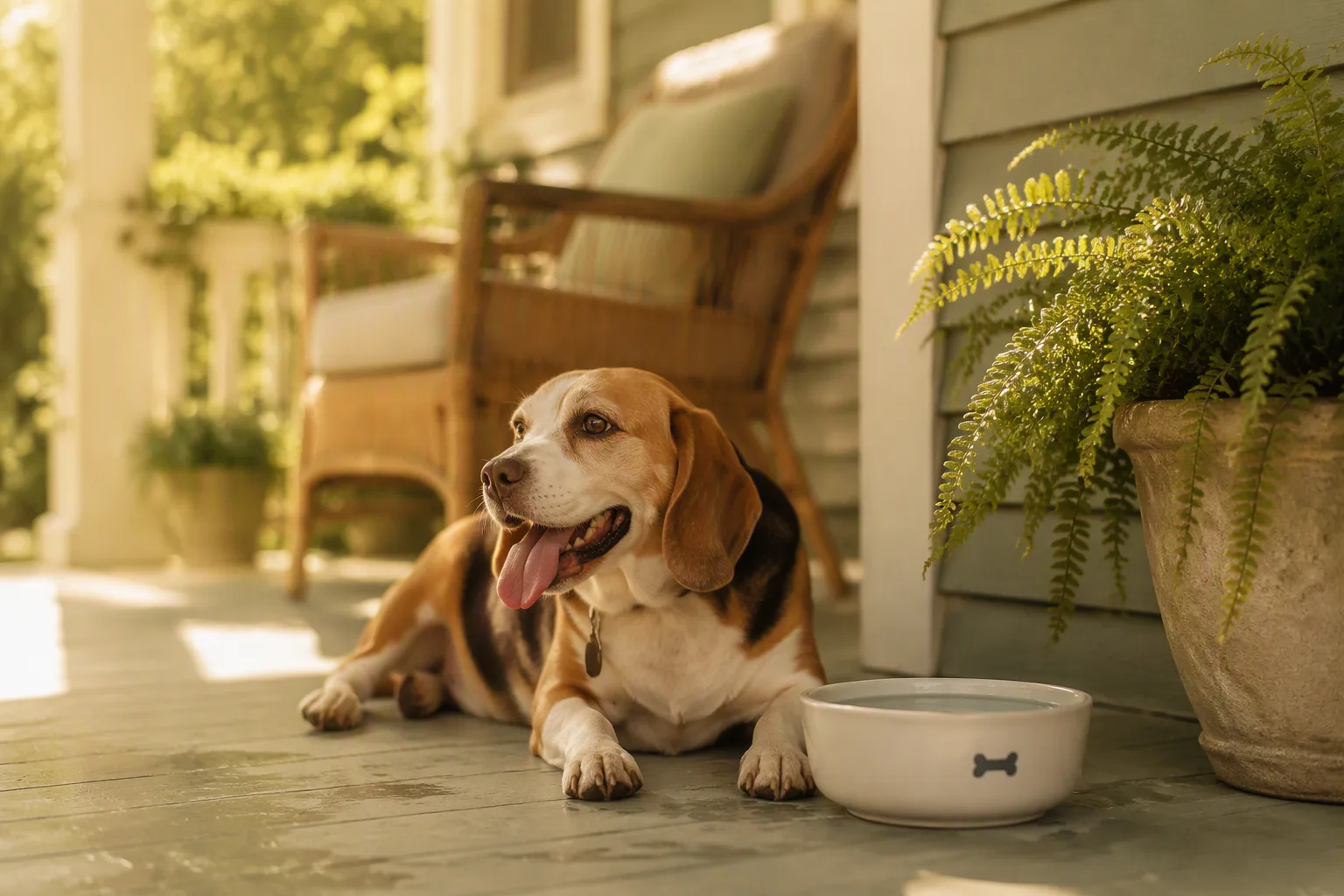
The short answer: the earliest signs of heatstroke in dogs are frantic panting that doesn't slow down at rest, thick sticky drool, gums turning brick-red, and unsteady walking. If you see these together, move the dog somewhere cool, wet the belly and paws with room-temperature water, and call a vet immediately — heatstroke can turn fatal in under an hour.
Now the longer story, because I learned the gap between "hot dog" and "emergency" the uncomfortable way. Two summers ago, our office beagle Mango came back from a 20-minute midday walk — 34°C, humid, nothing we thought twice about — and instead of heading for his water bowl, he stood in the doorway swaying slightly, drooling ropes of thick saliva. The walk had been routine. The next forty minutes were not.
Why dogs tip over so fast
Dogs cool themselves almost entirely by panting; they sweat only marginally through their paw pads. Panting works by evaporating moisture off the tongue and airway — and it collapses as a cooling system exactly when you need it most: in humid air, evaporation slows to a crawl. That's why a humid 32°C day is more dangerous than a dry 38°C one, something the veterinary guidance from the American Kennel Club's Canine Health Foundation makes explicit.
Once a dog's core temperature passes about 41°C, cells start taking damage. Organs follow. This is why the window between "first signs" and "emergency" can be under an hour.
The early signs, in the order we saw them
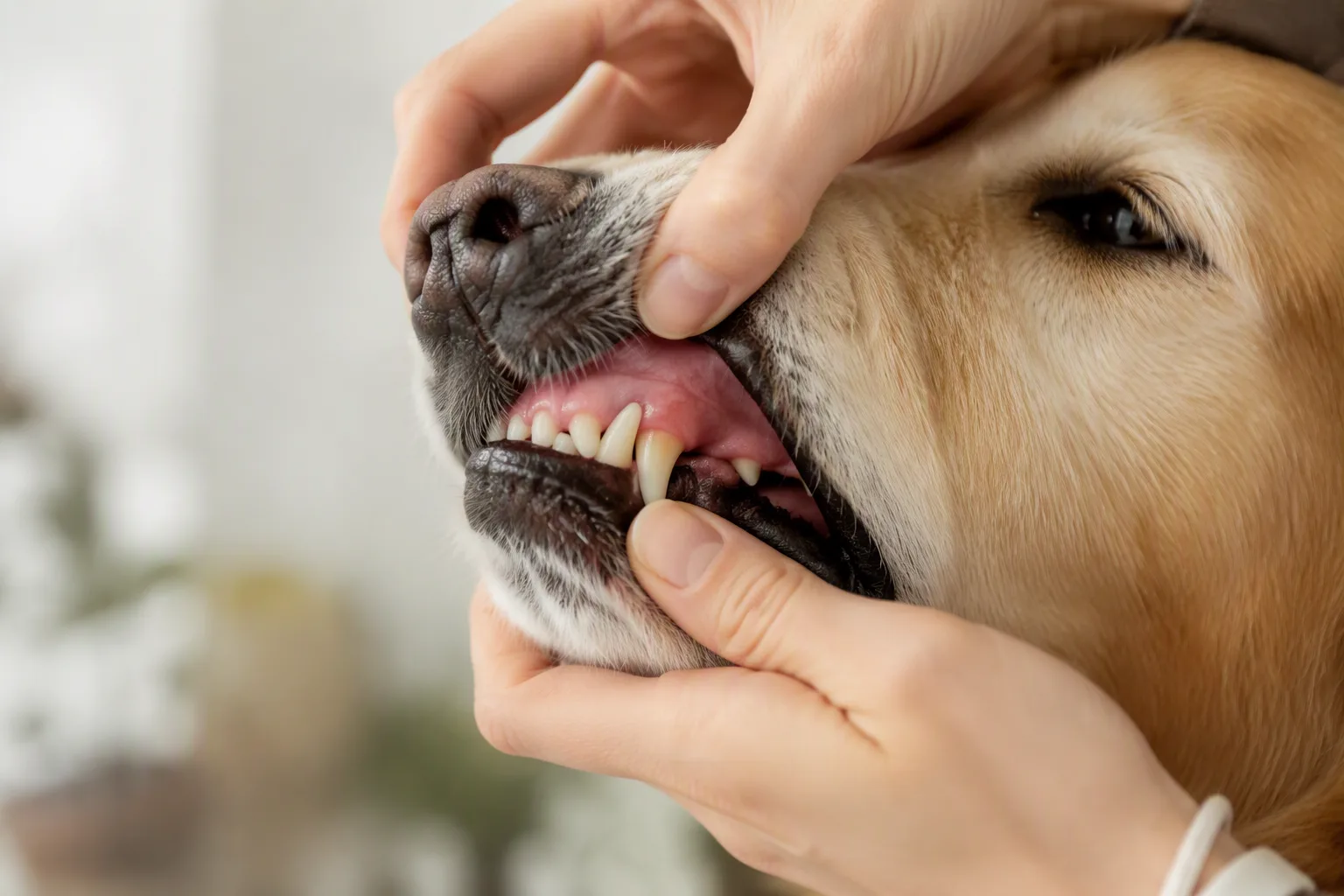
From our own close call and what our vet walked us through afterward, the escalation usually runs:
- Panting that doesn't downshift. Normal panting eases within a few minutes of rest. Heatstroke panting is frantic, loud, and continues unchanged after 5+ minutes in the shade. This is the single most useful early flag.
- Thick, ropey drool. Not the usual watery slobber — sticky strings. The body is pulling water out of saliva as dehydration sets in.
- Gum color change. Lift the lip: healthy gums are bubblegum pink. Brick-red means overheating; pale or bluish means it's already critical.
- Wobbling or "drunk" walking. The nervous system is starting to cook. Mango's slight sway in the doorway was this stage.
- Vomiting or diarrhea, collapse, seizures. By now you should already be driving to the clinic.
A note on breeds: flat-faced dogs (Bulldogs, Pugs, Boxers), overweight dogs, seniors, and thick-coated northern breeds hit these stages faster. Our vet's rule of thumb: if your dog snores at rest, treat every hot day as one risk level higher.
The 3-minute protocol our vet taught us
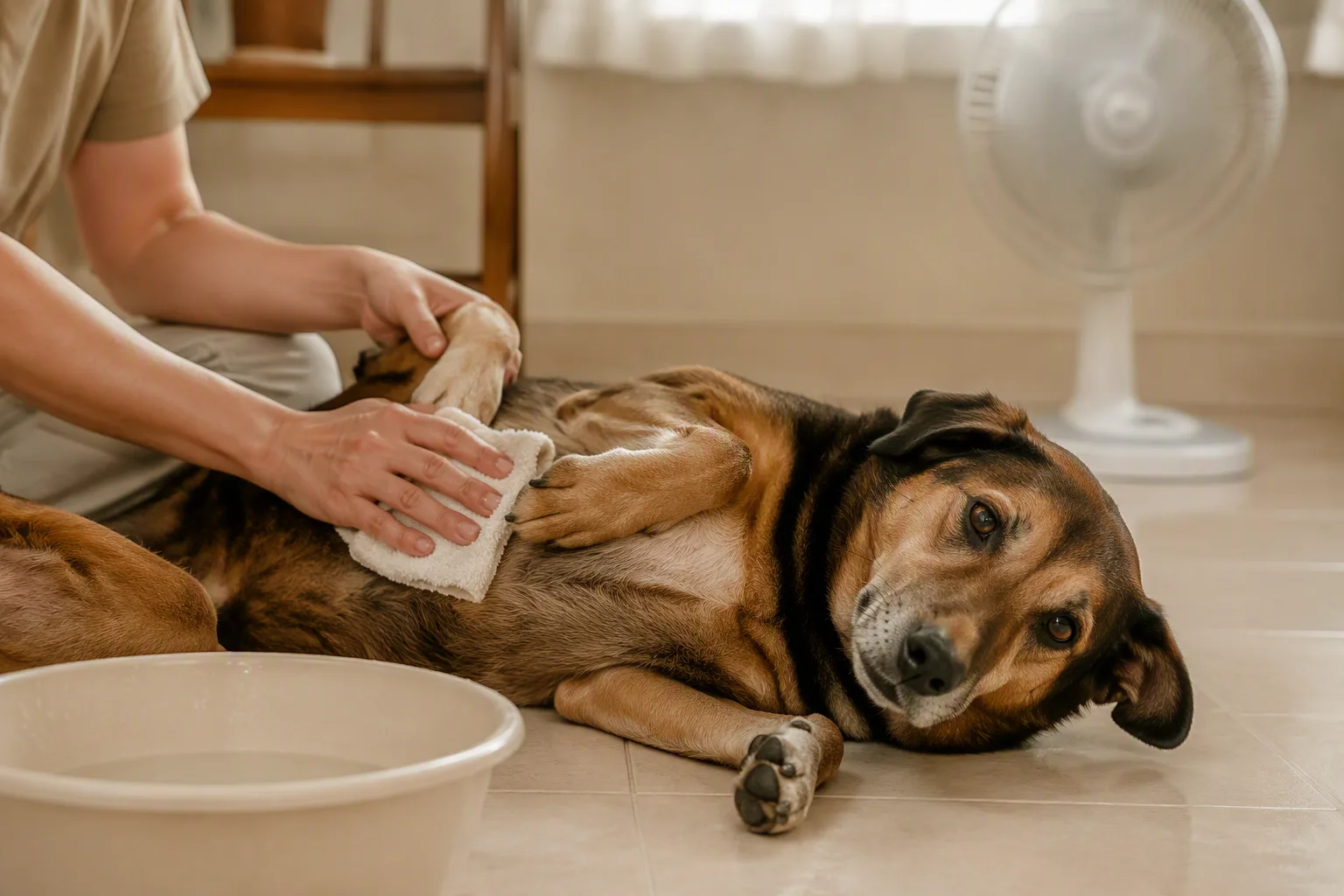
What we now do at the first two signs together:
| Step | Action | Why |
|---|---|---|
| 1 | Move to shade or AC immediately | Stop the heat input first |
| 2 | Wet belly, armpits, groin, paws with room-temperature water | These are the heat-exchange zones; cold water constricts vessels and traps heat |
| 3 | Airflow on the wet coat — fan, AC vent, open window | Evaporation does the cooling, not the water itself |
| 4 | Offer small sips of water, never force | Gulping triggers vomiting |
| 5 | Call the vet even if the dog "seems fine now" | Internal damage shows up hours later |
The counterintuitive part is the water temperature. Ice-cold water feels like the right move and is the most common mistake — it closes surface blood vessels and can trap core heat inside. Room-temperature water plus moving air outperforms ice every time.
What prevention actually looks like
After Mango's scare we rebuilt our summer routine around three things:
- Walk timing beats walk shortening. We moved walks to before 8 am and after 7 pm. A short midday walk in humidity is worse than a long dawn walk.
- Contact cooling at home. A pressure-activated gel cooling mat in his usual napping spot pulls heat from the belly — the same zones the emergency protocol targets, working preventively instead.
- Hydration you can measure. We track his water intake the same way we manage our cat fountains' cleaning schedule — fresh, clean, appealing water makes dogs drink more, and a well-hydrated dog pants more efficiently. Our water and feeding gear all lives on one supply shelf so the summer checklist takes thirty seconds.
The asphalt test is worth adopting too: press the back of your hand to the pavement for seven seconds. If you can't hold it, it's too hot for paw pads — and radiant heat off that surface hits a dog's belly far harder than it hits you at head height.
When it's not heatstroke
Heavy panting alone, in a dog that settles within minutes and drinks normally, is usually just a hot dog being a hot dog. The distinguishing feature of real trouble is stacking: panting that won't quit plus drool plus gum change. One sign is a watch-closely; two together is act-now.
Mango was lucky — we caught him at stage four, the vet got fluids into him, and bloodwork two days later came back clean. The whole episode cost us a terrifying afternoon and taught the entire office to lift a lip and look at gums. Learn the signs before the day you need them; by the time a dog is obviously in trouble, you're negotiating with a clock.
Sources referenced: American Kennel Club Canine Health Foundation (akcchf.org) heat-related illness guidance; treatment protocol as advised by our consulting veterinarian following the incident described.