Editorial — Published 2026-10-01 — By Wangzian, Pet Lifestyle Curator
Why Does My Cat Freeze in a Harness?
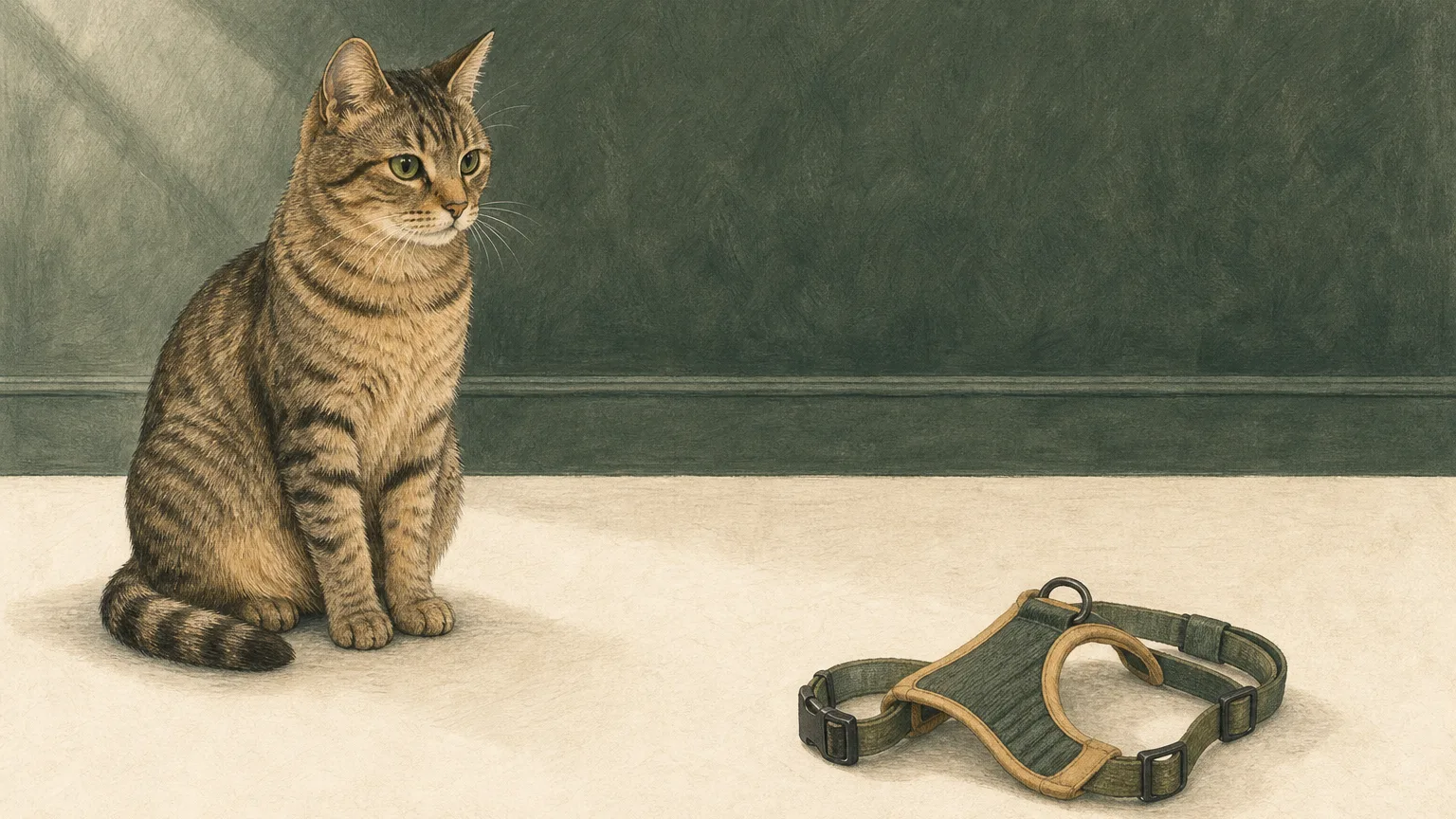
A cat that freezes when you put a harness on may be uncomfortable or overwhelmed; the posture alone cannot tell you why. Stop pulling or urging movement, check the fit and situation, and let the cat return to a comfortable activity before considering a gentler introduction.
Prepared by XueQiu Pets using attributed behavior guidance, not our own harness trial. Images are AI editorial illustrations, not product photographs or training records.
Why does my cat freeze when I put a harness on?
Start with what changed. Did your cat stop moving when the harness touched its back, when a fastening closed, when you attached the leash, or only after going outside? Those are different observations. A cat that explores indoors in the harness but crouches at the door needs a different next step from one that cannot move comfortably as soon as it is fastened.
Do not assume stillness means acceptance. In her Best Friends Animal Society guide, cat behavior expert Samantha Bell specifically lists freezing, hiding and panic outdoors as reasons to stop and bring the cat inside. Her advice is to respect the cat's response rather than force an outing.
There is a useful first-hand detail in that guide: Bell reports that she previously had a cat who enjoyed leash walks, while none of her three current cats wants to go outside in a harness and leash. That is her experience, not a study of how often cats freeze and not a XueQiu Pets test. It illustrates why enthusiasm for walking one cat does not establish what another will enjoy.
Check the setup before asking for another step
Work indoors where your cat already feels secure. Keep the exit closed and make removal straightforward. Inspect the harness instructions, fastening position and adjustment range. A generic photograph cannot establish the correct size or fit for your cat. Do not loosen the harness until it can slip off just to obtain movement, and do not tighten it as a way to suppress resistance.
Watch whether a strap shifts toward a sensitive area or movement changes immediately after fastening. These observations can help you explain the problem to a veterinarian or qualified behavior professional; they do not establish a diagnosis. If discomfort or abnormal movement continues after the equipment is off, stop training and contact your veterinarian.
Use the following editorial checklist to record what actually happened. It contains no invented training results.
| Record | What to write down |
|---|---|
| Exact step | Harness approached, touched, fastened, or leash attached |
| Setting | Familiar room, doorway, or outdoors |
| Response | Voluntary sniffing, ordinary movement, crouching, hiding, or freezing |
| After stopping | Whether normal activity returned once the equipment was removed |

Rebuild the introduction without a deadline
Restart at a step your cat can approach willingly, which might mean simply investigating the harness. Pair calm curiosity with a preferred reward. Wearing it and walking in it are later steps, not conditions the cat must meet before you allow a break. Keep your hands gentle and avoid pulling a motionless cat along the floor.
Bell's published plan separates introduction into small actions: investigating the equipment, accepting its weight, fastening it, moving indoors, and eventually adding a leash. She recommends marking and rewarding each step five times before progressing. That is one expert's training plan, not a countdown after which every cat becomes ready.
Her suggested sessions last no more than four to five minutes. That is a ceiling, not a target to finish despite freezing. End sooner if your cat becomes distressed. She also warns against withholding or delaying meals to make training rewards more attractive.
For each attempt, compare the response with your last comfortable step. If the cat no longer approaches willingly, step back rather than adding duration or taking the experiment outside. A missed outing is preferable to rehearsing fear.
Staying indoors can be the better outcome
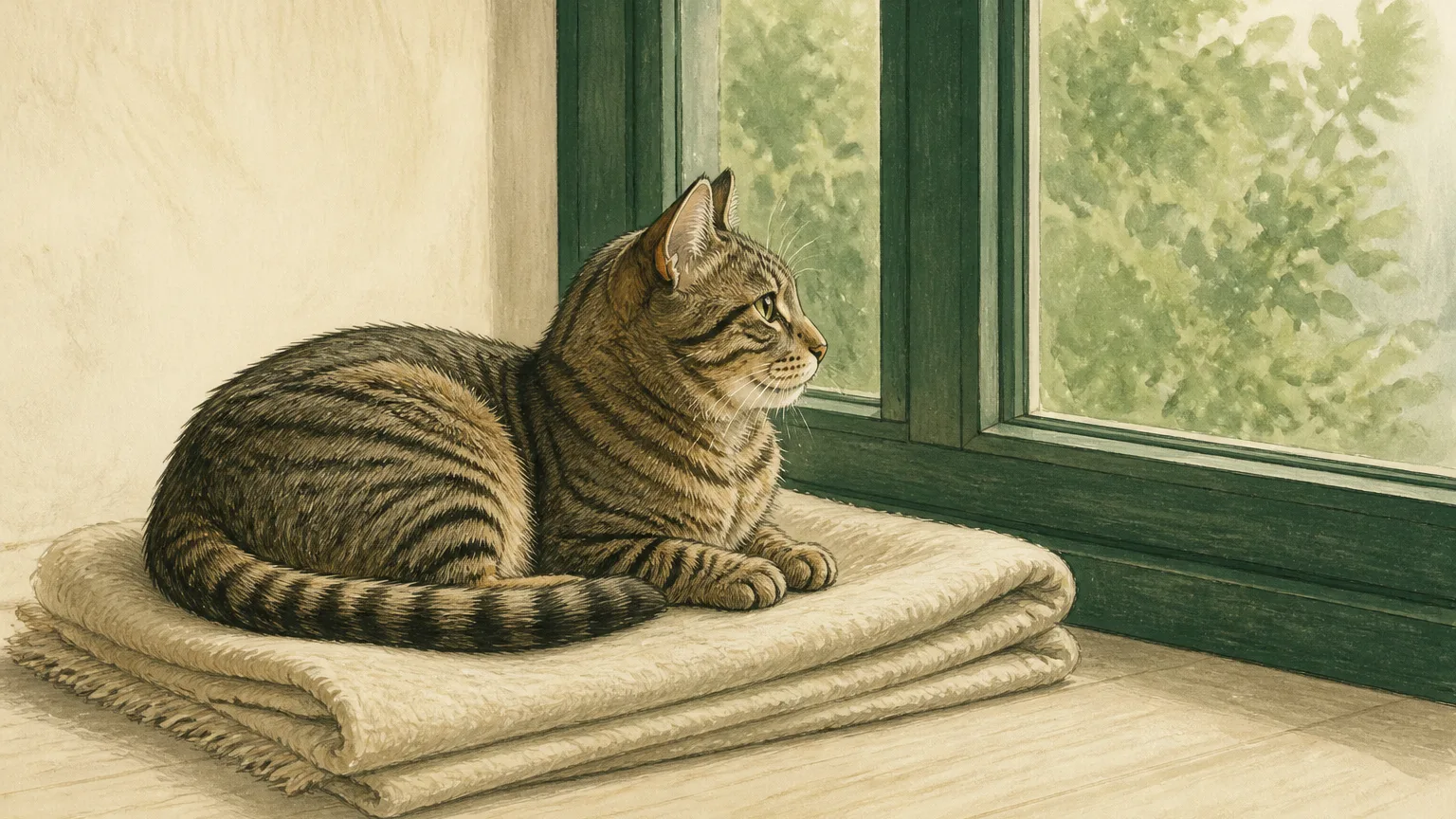
Not every cat needs a walking routine. Bell recommends indoor alternatives for cats that are very uncomfortable outside, including a bed or blanket beside a window. Her emphasis is the cat's comfort and choice, not how adventurous the activity looks. In a separate Best Friends resource, choices, control and wand play are practical ways to enrich a cat's day.
A window resting place, suitable play and opportunities to explore the home can therefore be worthwhile activities in their own right. Our guide to changes in indoor play during winter discusses another situation where observing the individual cat matters more than following a seasonal expectation. For a comfortable resting spot, see where to put a cat bed in winter.
If you compare equipment in our pet product range, use the actual model's instructions and verified measurements. Illustrations in this article cannot prove fit, comfort or escape resistance. Buying a different harness is not evidence that a reluctant cat will enjoy walks; it only changes one part of the situation.
Questions before trying again
Should I pull gently until my cat starts walking?
Do not use leash tension to move a frozen cat. Stop the attempt and return to a safe, comfortable setting. Bell describes a cat's leash as a safety aid rather than a way to steer it. Comfortable voluntary movement indoors should come before an outdoor outing.
How long should a harness session last?
Bell suggests no more than four to five minutes, with rewards for calm curiosity. This is not a required minimum. If your cat freezes, hides or becomes distressed sooner, end the attempt. Do not extend an uncomfortable session simply because a timer still has time left.
What if my cat never enjoys wearing the harness?
You can stop pursuing leash walks. Indoor enrichment is not a failed version of an outdoor life. Choose activities your cat willingly engages with, and seek veterinary advice if you are unsure whether discomfort is involved. Freezing in a harness does not give you a reliable deadline for recovery or readiness.
Sources and preparation
- Samantha Bell, Best Friends Animal Society: Can Cats Walk on a Leash?. Read on October 1, 2026; page publication date was not shown. Source of the attributed personal experience, training suggestions and stop signals. No universal success rate is claimed.
- Best Friends Animal Society: How to Show Your Cat You Love Them. Read on October 1, 2026; supports choices, control and play as enrichment.
Research and drafting used AI assistance. The checklist is an editorial tool, not collected data. No firsthand XueQiu Pets trial, veterinary review, product test or customer testimonial is claimed.