Editorial — Published 2026-09-20 — By Wangzian, Pet Lifestyle Curator
Where to Put a Cat Bed in Winter: A Room-by-Room Check

Put a cat bed in a quiet, draught-free indoor spot that stays comfortably warm after sunset and lets your cat leave freely. Start near a resting place your cat already chooses; a sunny window is an option, not an obligation.
The useful question is what happens there when the sun disappears, the curtains close and people come home. A good afternoon perch can become an awkward overnight bed.
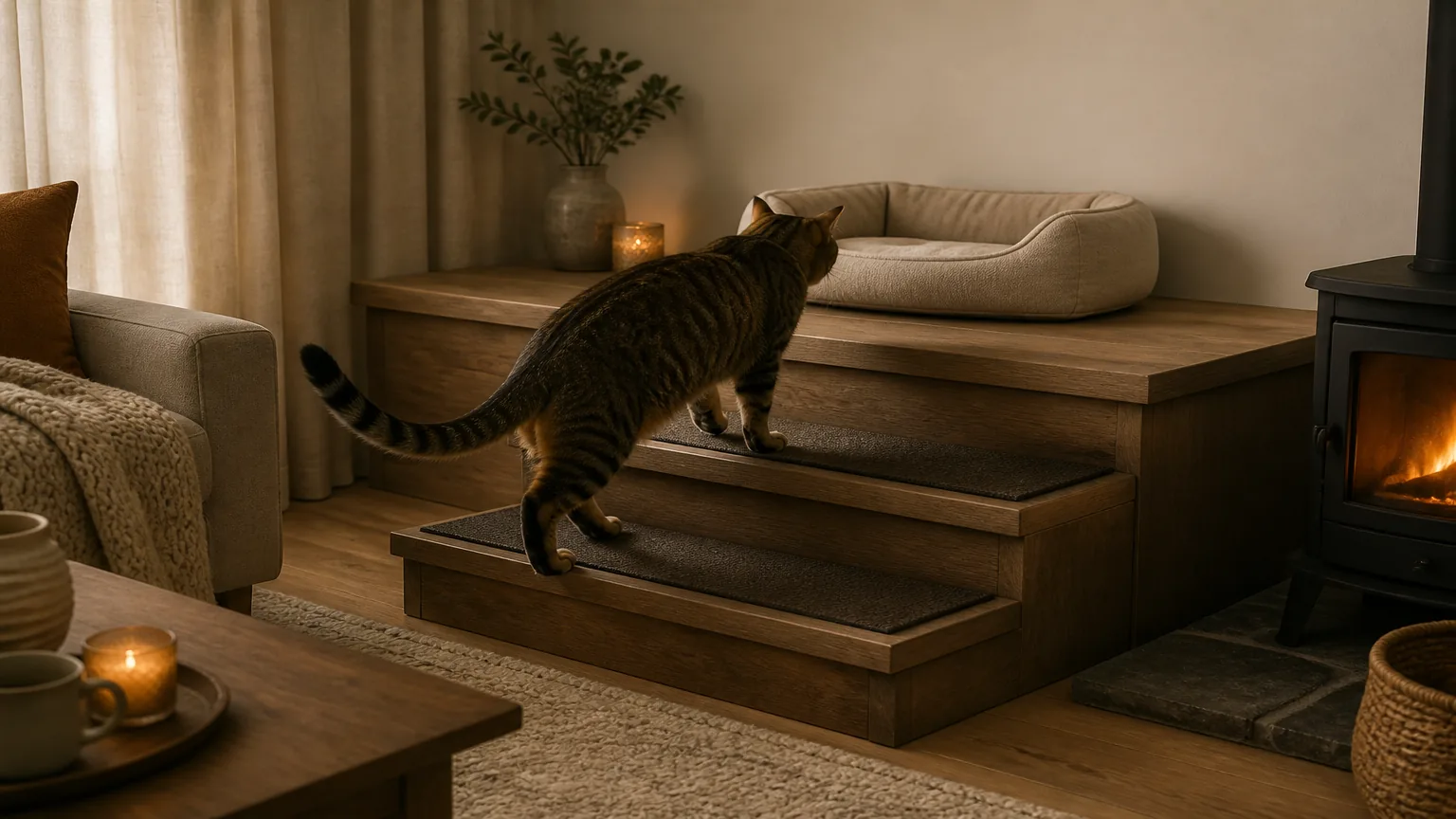
AI-generated editorial illustration; not a product test or a photograph of a real household.
Where to put a cat bed in winter: check the whole day
Cats Protection recommends warm, comfortable places without draughts. International Cat Care also recommends a choice of resting locations and bedding with a familiar scent. Neither source provides a universal distance between a bed and a window.
Check a candidate spot at your cat's level. Does air move through a nearby door gap? Does a curtain fall across the entrance? Can the cat reach the bed without crossing the busiest walkway? A location can be warm and still be difficult to use.
Try this illustrative apartment walkthrough, not a measured case. You have two possible spots: the window corner and the side of the sofa. Inspect both in daylight, then after the curtains close. Keep the existing resting place available while offering the alternative. This is a practical observation method, not a validated preference test.
| Candidate | What to check | When to reconsider |
|---|---|---|
| Window corner | Draughts and curtain position after dark | Cold airflow or a blocked approach |
| Beside the sofa | Foot traffic and an open way out | People repeatedly step over the bed |
| Quiet bedroom | Overnight access | A closed door separates the cat from resources |
Keep warmth separate from direct heat
A bed does not need to touch a heat source to be in a warm room. Ordinary fabric beds and purpose-built radiator beds are different items. Do not assume a loose basket, cushion or blanket is suitable for mounting on heating equipment.
Cats Protection mentions heat pads and radiator beds as options; International Cat Care discusses radiator beds too. These are general care recommendations, not permission to improvise an electrical setup. If using a heated product, follow its instructions for placement, bedding coverage and supervision. Check suitability with your vet for a cat with reduced mobility or illness.
For an ordinary bed, choose ambient room warmth and leave an unheated resting alternative accessible. Check the spot while the heating is actually running. The sources reviewed do not establish one safe clearance for every heater, so a made-up centimetre rule would be misleading. Follow the appliance instructions instead.
Avoid equating a cosy bed with treatment. A suddenly inactive cat needs attention even in a warm home. Our guide to winter changes in indoor-cat activity explains why season alone is not enough to interpret a change.

Leave a way out and an easy way up
The Feline Veterinary Medical Association's Cat Friendly Homes guidance says a safe retreat should allow entry and exit from at least two sides if a cat feels threatened. That is guidance about escape access, not a requirement to cut two holes into every bed.
Consider the route around the sleeping area. A covered bed pushed into a tight recess may let another cat control its only approach. Offering separate resting areas can be more useful than lining several beds up beside one radiator. Keep resting places separate from feeding and toileting areas, as the guidance recommends.
Height is another choice to match to the individual. International Cat Care recommends elevated resting options, but also says cats must be able to get down easily. A wobbling chair or slippery shelf is not a useful upgrade.
For a cat hesitating to jump, offer an easily reached bed and ask your vet about the change. Cats Protection suggests steps to familiar resting places for cats with arthritis. Stable access and a clear landing area matter more than achieving a particular height.
Let familiar bedding do some of the work
Before buying anything, see whether your cat already has a suitable resting surface. International Cat Care notes that an owner's bed, chair or sofa can serve the purpose. Adding suitable bedding to an accepted location may be enough.
Use washable bedding and clean it when soiled. The same guidance cautions against excessive washing because familiar scent helps cats feel secure. This is not advice to leave damp or dirty bedding in place.
For the apartment example, change the location before changing the bed, detergent and household routine together. Record where the cat settles voluntarily and whether it can enter and leave without interruption. These are observations you can discuss, not proof that a particular fabric improves sleep.
If selecting a new bed from our pet product range, check access, support and care instructions for the actual item. A woven bed is not automatically heated, weatherproof or suitable for outdoor winter shelter. The illustrations here show generic indoor arrangements, not verified photographs of our products. Keep this guide's advice indoors; outdoor shelter needs are different.
Questions to settle before the first night
Can the bed stay beside a window?
Yes, if that particular place remains comfortable and accessible after dark. Keep another option available. Do not move a cat into a cold or awkward spot just because it looks attractive in daylight.
Should I move every bed closer to the radiator?
No. Offer choices and use heating products only as directed. In a multi-cat home, concentrating resting spots can also concentrate competition. Watch whether each cat can approach and leave without being blocked.
What if my cat stops using its usual bed?
Look for household changes, but do not assume the reason is temperature. New reluctance to jump, less grooming or discomfort when touched warrants veterinary advice. If a visit is needed, our cat vet-visit preparation guide can help with the practical arrangements.
When deciding where to put a cat bed in winter, preserve a familiar option and check the route as carefully as the warmth.
Sources and production notes
- Cats Protection: Cats and cold weather. Indoor comfort and arthritis sections reviewed; page date not established.
- Feline Veterinary Medical Association: What Your Cat Needs to Feel Secure. Safe places, separated resources and sleeping-area guidance reviewed.
- International Cat Care: Making your home cat friendly. Dated 25 October 2024; resting-place and bedding sections reviewed. Older guidance, not a new winter trial.
Sources accessed 19 September 2026. Written with AI assistance using institutional care guidance. The apartment walkthrough is an editorial example, not an owner's first-hand report. No temperatures, sleep outcomes or product performance were measured for this article.