Editorial — Published 2026-09-15 — By Wangzian, Pet Lifestyle Curator
Cat Eating Too Fast? How to Slow Down Mealtimes
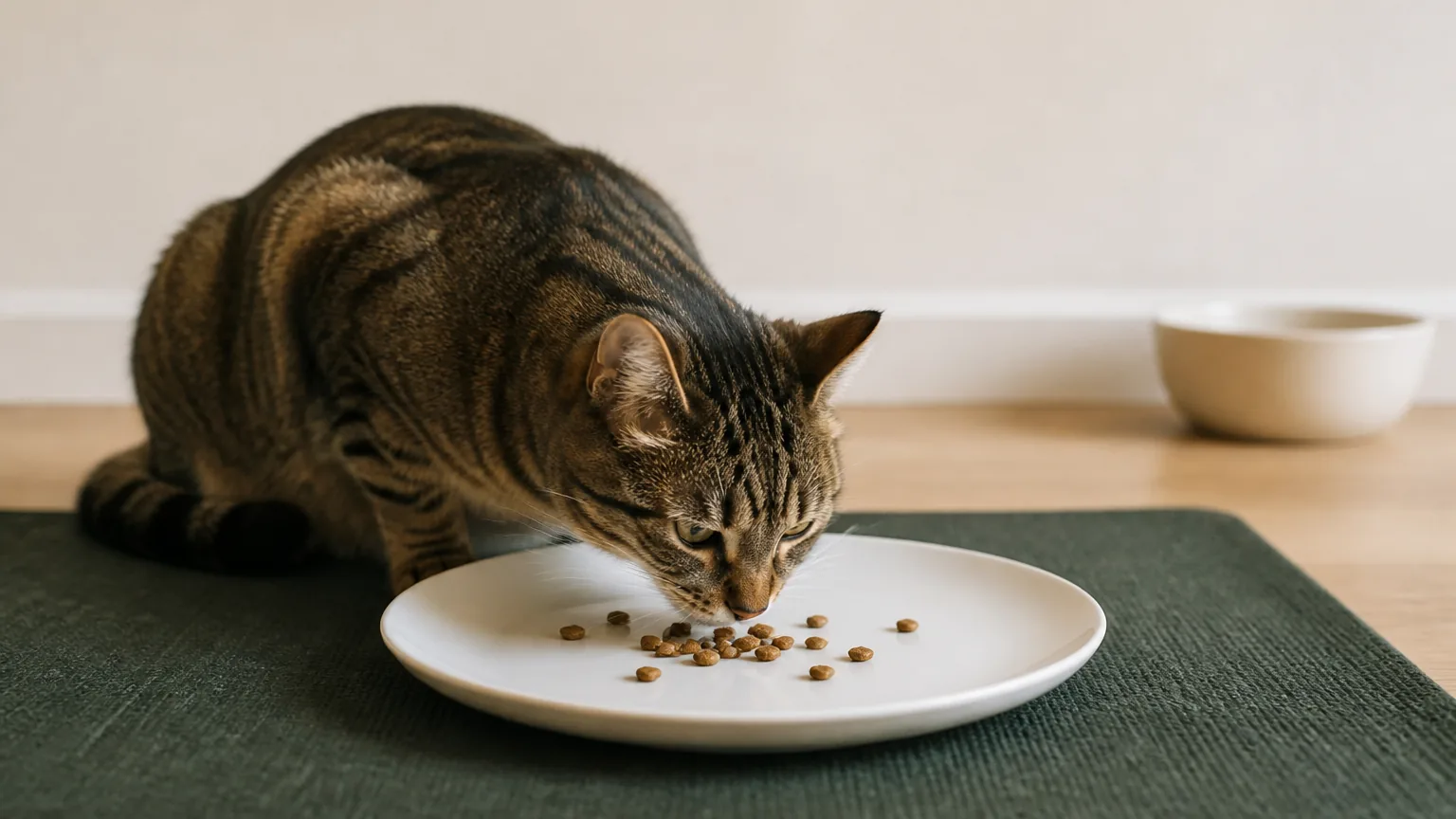
To slow a cat that eats too fast, divide its usual measured meal into smaller servings, reduce competition, and try an easy food puzzle under supervision. Repeated food regurgitation, difficulty swallowing or weight loss needs veterinary attention, not a harder bowl.
A clean plate tells you how much disappeared, not whether the meal went comfortably. Watch the cat as well as the clock: is another cat hovering, does food come back up, or does the cat abandon a difficult feeder? Each observation calls for a different response.
Check what happens when food comes back up
Regurgitation is usually passive: swallowed food returns with little effort. Vomiting involves active abdominal contractions. Undigested food alone does not establish the cause, and eating quickly is only one possibility.
Merck's veterinary manual lists swallowing difficulty and regurgitation among signs of esophageal problems. Drooling, repeated swallowing attempts and pain also deserve attention. Contact your vet about repeated episodes; breathing trouble or suspected choking needs urgent care. Do not wait for a slow-feeder experiment to resolve those signs.
If safely possible, record a short video of an episode without delaying help. Note the food, amount and what happened before it. Our vet-visit preparation guide covers preparing for the appointment; it does not diagnose the cause.
Cat eating too fast: how to slow down the next meal
For an otherwise comfortable cat, start with the food amount already appropriate for that cat. Keep its regular food while changing the presentation, so you can see what the change does.
Weigh the meal before splitting it. An illustrative 20 g meal divided into two servings is 10 g plus 10 g, not two 20 g meals. This is arithmetic, not a recommended ration. Daily needs depend on the individual cat and diet; ask your vet when unsure.
Offer a smaller serving, then supervise the remainder rather than putting everything down at once. No fixed waiting interval is established by the sources here. Never withhold needed food to force compliance, and coordinate changes with your vet if meals are linked to medication.
Spread kibble over a clean, stable shallow plate rather than leaving it in a central pile. This is a simple presentation option, not a tested treatment. If you use a feeder, check the quantity it actually dispenses before changing its schedule.
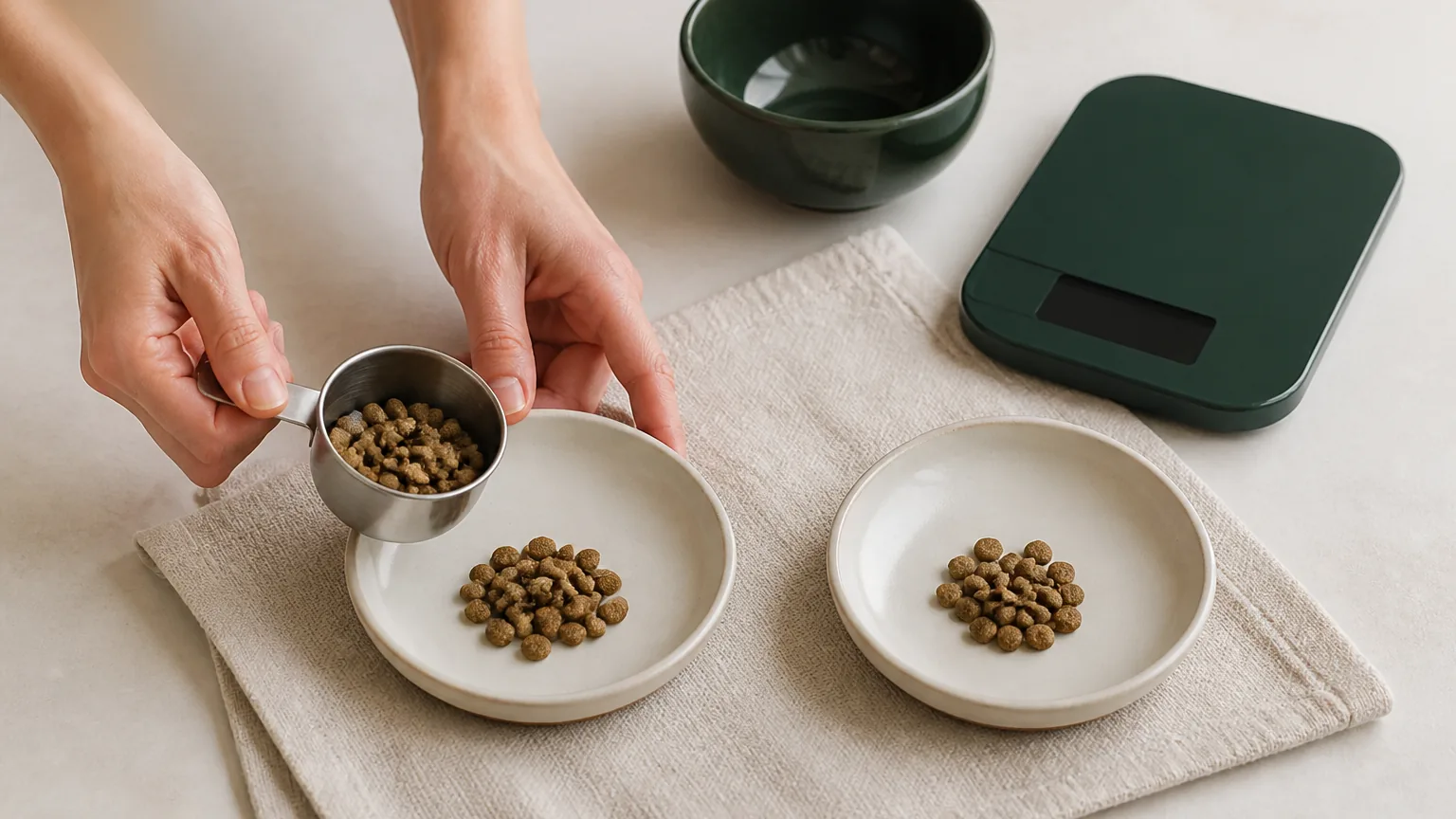
Introduce a puzzle the cat can actually solve
VCA's feeding guidance suggests distributing food among muffin-pan wells or using an interactive feeder. Choose clean, food-safe equipment without sharp edges or pieces the cat could swallow. Supervise the introduction and remove damaged items.
Start with an easy, accessible arrangement and a small part of the planned meal. The remainder can stay available in the familiar dish. Dantas and colleagues advise matching puzzle difficulty to the cat's ability; some nervous cats benefit from having the new device beside their usual feeding container.
Watch whether the cat obtains food comfortably. A cat leaving an inaccessible meal uneaten is not a successful slow eater. Simplify the arrangement if it causes frustration; do not turn hunger into a training tool. For wet food, wash contact surfaces after use and follow its storage instructions.
What the published case actually showed
A 2016 veterinary review describes two 3.5-year-old sibling cats that begged, woke their owner for food and stole food from household surfaces. After mobile and stationary food puzzles were introduced, the authors reported slower eating and less food-related meowing.
Their owners also stopped leaving food and dirty dishes on counters and in sinks. That matters: the intervention changed both access to rewards and food delivery. The report gives no timed meal-speed comparison and no controlled estimate of how much the puzzle contributed.
The authors explicitly describe their cases as retrospective, with multiple interventions in some households. This is firsthand clinical experience reported by those authors, not our own test and not proof that a particular bowl prevents regurgitation. It supports a cautious trial with observation rather than an advertised percentage improvement.
Give each cat room to eat
If one cat repeatedly watches another approach its dish, try separate feeding spaces. PetMD's veterinarian-written regurgitation guidance recommends feeding away from other cats when competition contributes to rushed eating.
Use a quiet familiar room if the cat settles there; a closed door can separate meals when tolerated. Monitor both cats and do not use isolation as punishment. Two bowls touching each other still allow one cat to reach both meals.
A timer schedules access but does not automatically reserve food for one animal. Read the automatic feeder guide for the distinction between timed dispensing and individual access control. XueQiu Pets' product catalogue is not evidence that a listed feeder changes chewing speed or treats disease.
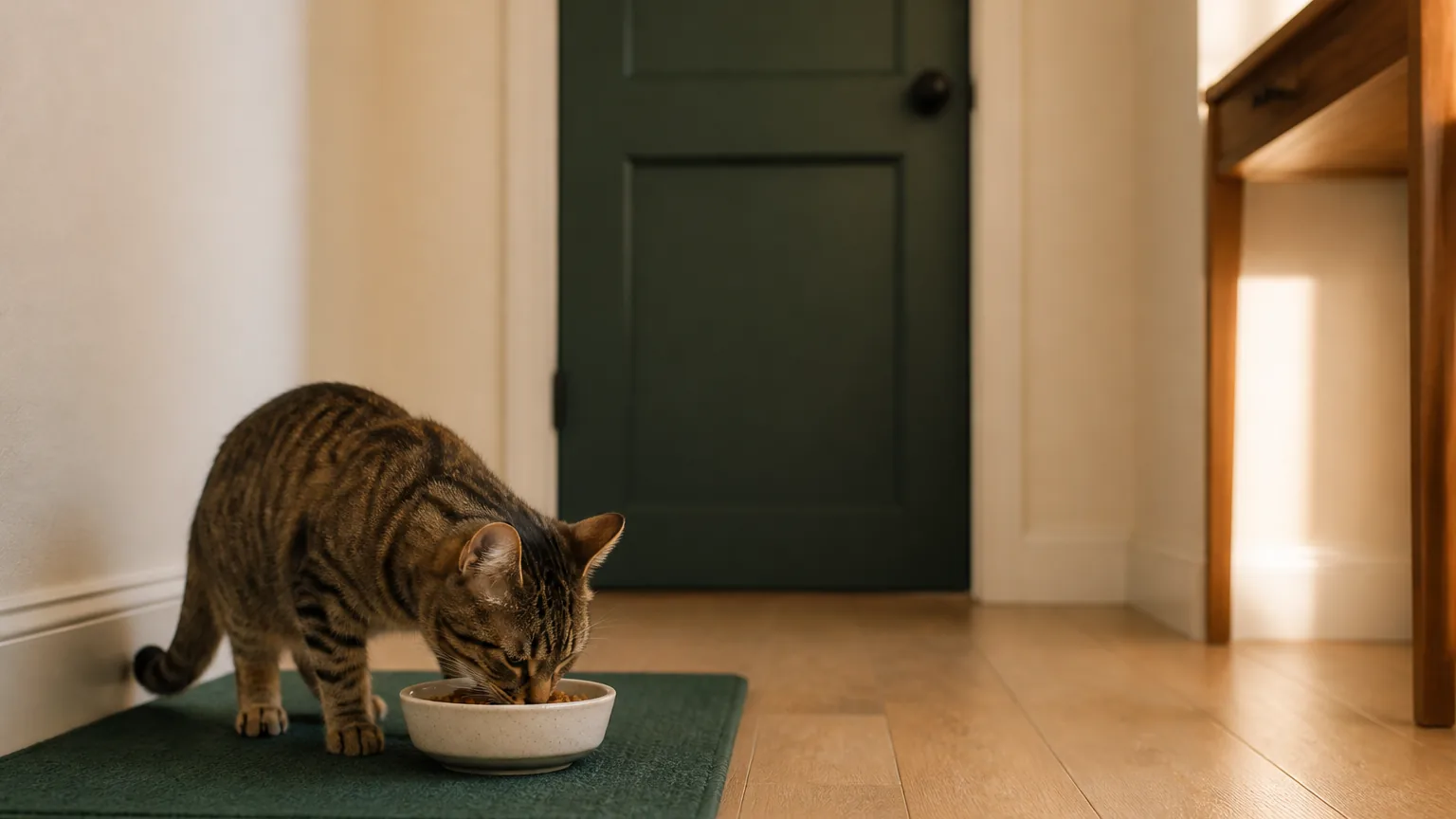
Record comfort and intake, not just minutes
Use this observation sheet without inventing a target meal duration. The aim is comfortable access to an appropriate food amount.
| Record | What it helps you notice |
|---|---|
| Food offered and food left | Whether a harder setup simply reduced intake |
| Serving arrangement | Which change the cat actually encountered |
| Other animals near the dish | Whether food competition was present |
| Food returning, retching or swallowing difficulty | Details to report to your vet |
Keep the daily allowance unchanged unless your vet advises otherwise. A schedule, a food-access problem and a medical symptom need different solutions; buying another bowl does not distinguish them.
Questions before buying a slow feeder
Is there a normal number of minutes per meal?
The sources reviewed here do not establish a universal target. Intake, comfort and recurrent symptoms are more useful than comparing your cat with a video online.
Will a timed feeder guarantee slower eating?
No. It can present smaller scheduled amounts, but a cat may still swallow each serving quickly. Check actual intake and access by other animals.
Should I raise the bowl if food comes back up?
Ask your vet first. Feeding posture can be part of treatment for particular esophageal disorders; it is not a universal home remedy for a fast eater.
Sources and editorial notes
- Dantas LMS, Delgado MM, Johnson I, Buffington CAT (2016). Food puzzles for cats: Feeding for physical and emotional wellbeing. Read the abstract, relevant introduction and implementation sections, case table and limitations. The sibling-cat example is the authors' clinical report, not a controlled efficacy trial. This older source remains useful for its detailed observations; it does not establish current product performance.
- VCA Animal Hospitals. Feeding a Cat Who Loves to Eat. Named veterinary authors; portion-control and slow-feeding guidance consulted. Publication date was not displayed in the fetched body.
- Merck Veterinary Manual. Disorders of the Esophagus in Cats. Patricia Walters, VMD; page states last updated September 2024. Consulted for symptom and disease boundaries, not to recommend treatments without examination.
- PetMD. Cat Regurgitation. Katie Grzyb, DVM, September 2022. Consulted for passive versus active expulsion and feeding competition. This article does not adopt every treatment suggestion or disease example in that page.
Prepared by XueQiu Pets Editorial with AI assistance and source checking. We conducted no owner trial or product test. The 20 g example illustrates dividing an existing meal; it is not a feeding prescription. Images are AI-generated illustrations, not clinical documentation or portion recommendations. This educational article cannot determine why an individual cat returns food.