Editorial — Published 2026-08-10 — By Wangzian, Pet Lifestyle Curator
Cat Hides When the Carrier Comes Out? Here Is What Training Actually Fixes
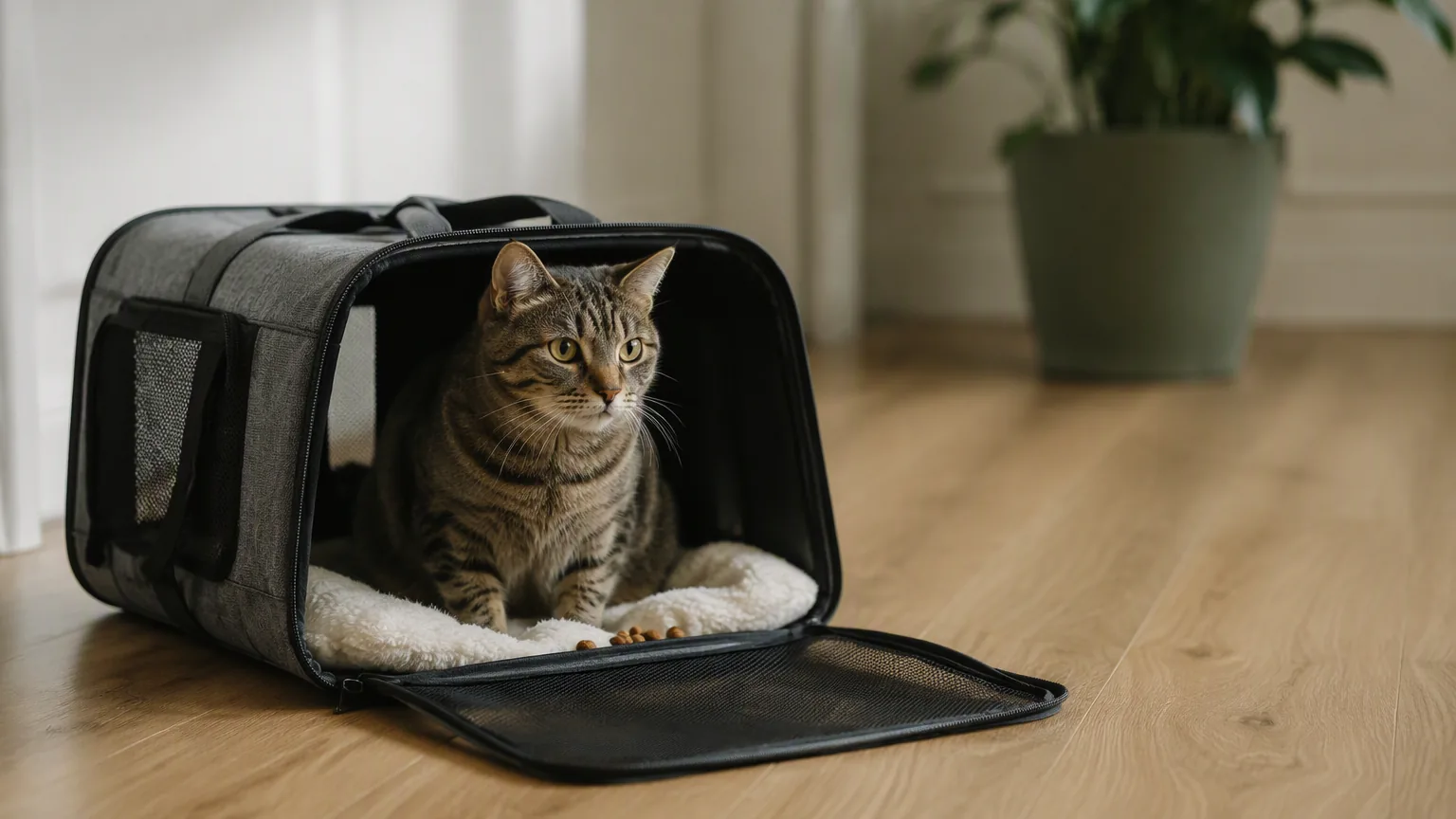
Your cat hides because the carrier reliably predicts what comes next: confinement, a car, and a stranger with cold hands. Leaving the carrier out and feeding meals in it does help — but a controlled trial found it lowers stress during the car ride, not inside the exam room. Knowing which half it fixes changes how you plan the visit.
That distinction matters, because almost every article on this topic implies the opposite: train the cat, and the whole appointment gets easier. The evidence does not say that.
The study most carrier advice never mentions
In 2018 a team at the University of Veterinary Medicine Vienna ran a blinded randomised controlled trial on exactly this question. Twenty-two cats, all neutered domestic shorthairs except one longhair, aged eight months to 4.3 years, average weight 4.04 kg. Every cat made two visits to a mock veterinary practice. Between visit one and visit two, eleven of them received 28 positive-reinforcement carrier training sessions across six weeks. The other eleven got nothing.
Twenty-eight sessions. That number is worth sitting with. Most "get your cat used to the carrier" advice implies a weekend project.
Stress was scored from video using a modified Cat Stress Score, with two raters checked against each other. Ear temperature was taken before and after transport as a physiological cross-check.
What training changed
During the car ride, trained cats dropped further on the stress score than controls (−0.60 versus −0.23, p = 0.007). They spent more time hunting for food rewards — 33 seconds versus 6. They sat instead of freezing: a 233-second increase against essentially none in the control group. Lip licking and posture shifts rose too, both signs of an animal actively coping rather than shutting down.
The veterinary examination itself ran 42 seconds shorter on average for trained cats, against 12 seconds for controls (p = 0.010). For a procedure where every extra second of restraint compounds the cat's fear, that is a real gain.
What training did not change
Here is the part that gets left out. The authors' own conclusion reads: "Besides ear temperature measures, there was no difference in physiological parameters between groups."
Training moved behaviour in the car. It did not move the cat's underlying physiology in any measure except ear temperature. And notably, the average stress score across all cats — trained and untrained, in the carrier, in the car, in the waiting room — sat at 4.29 on a scale where 5.31 reads as "fearful, stiff."
Even after six weeks of work, these were still tense cats.
Two limits you should weigh before copying the protocol
Only three of eleven cats finished the full seven-stage programme. Six reached stage seven, two got to stage six. If a research team with a fixed schedule could not complete training on most of their cats in six weeks, a household with a job should plan for slower progress, not faster.
The groups were not balanced at baseline. Of the eleven trained cats, seven would already walk into the carrier on their own. In the control group, only four would. Randomisation does that sometimes with small samples, and it means part of the measured gap may reflect who the cats already were rather than what the training did. The authors report it openly, which is a mark in the study's favour, not against it.
What to do when your cat hides when the carrier comes out
If your cat vanishes the moment the carrier appears, the carrier has become a signal. The Vienna work suggests you can weaken that signal enough to change the journey. It gives no evidence you can weaken it enough to change how the cat feels on the exam table.
So split the problem:
The part you can fix at home. Bring the carrier out of storage permanently. Feed near it, then in it. Leave the door open. Reward voluntary entry, never bundle the cat in. The trained cats in Vienna searched for food during the car ride — a cat that expects something good in the carrier behaves differently in transit. Budget weeks, not days, and expect to be one of the households that does not finish the full protocol.
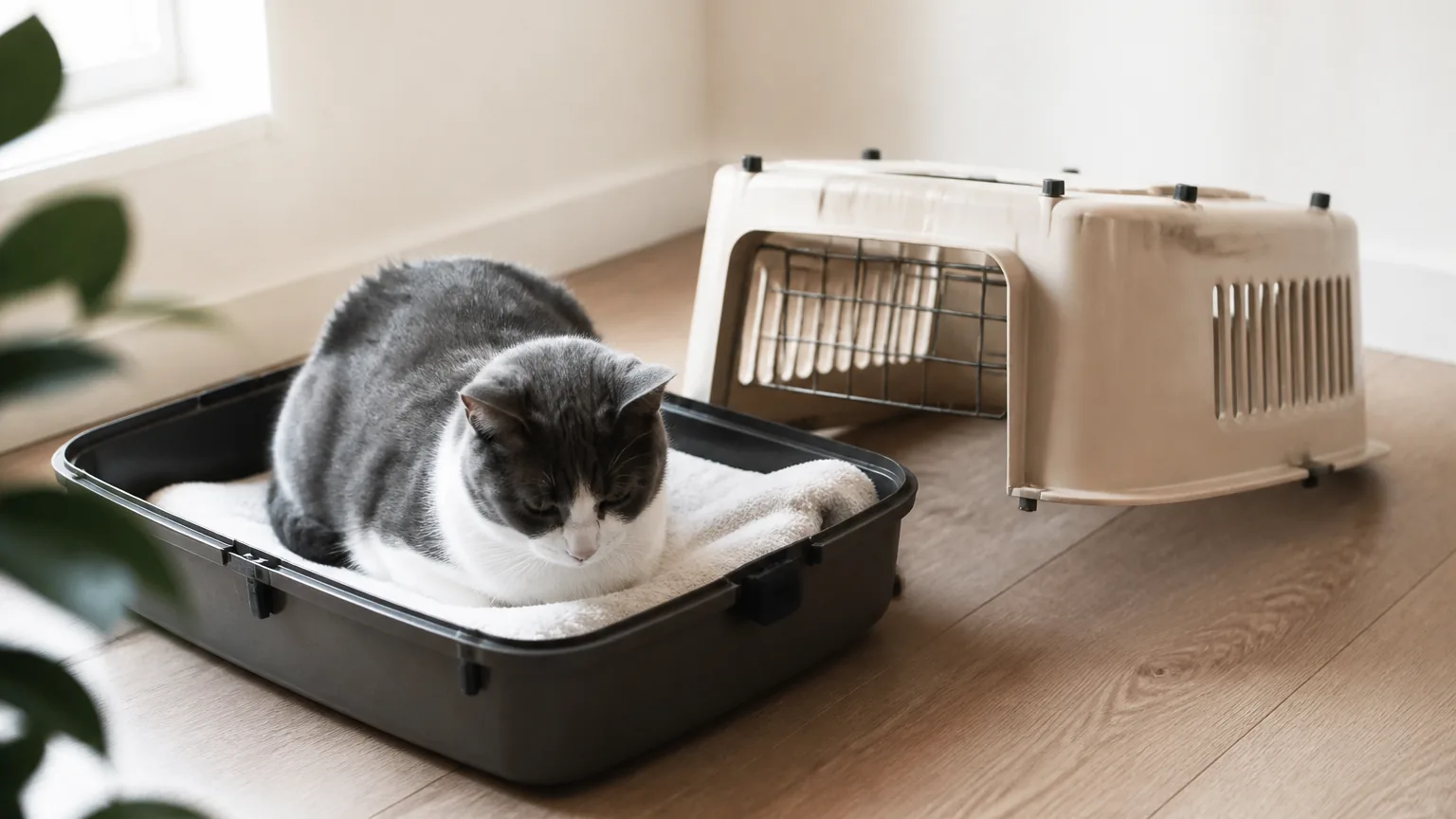
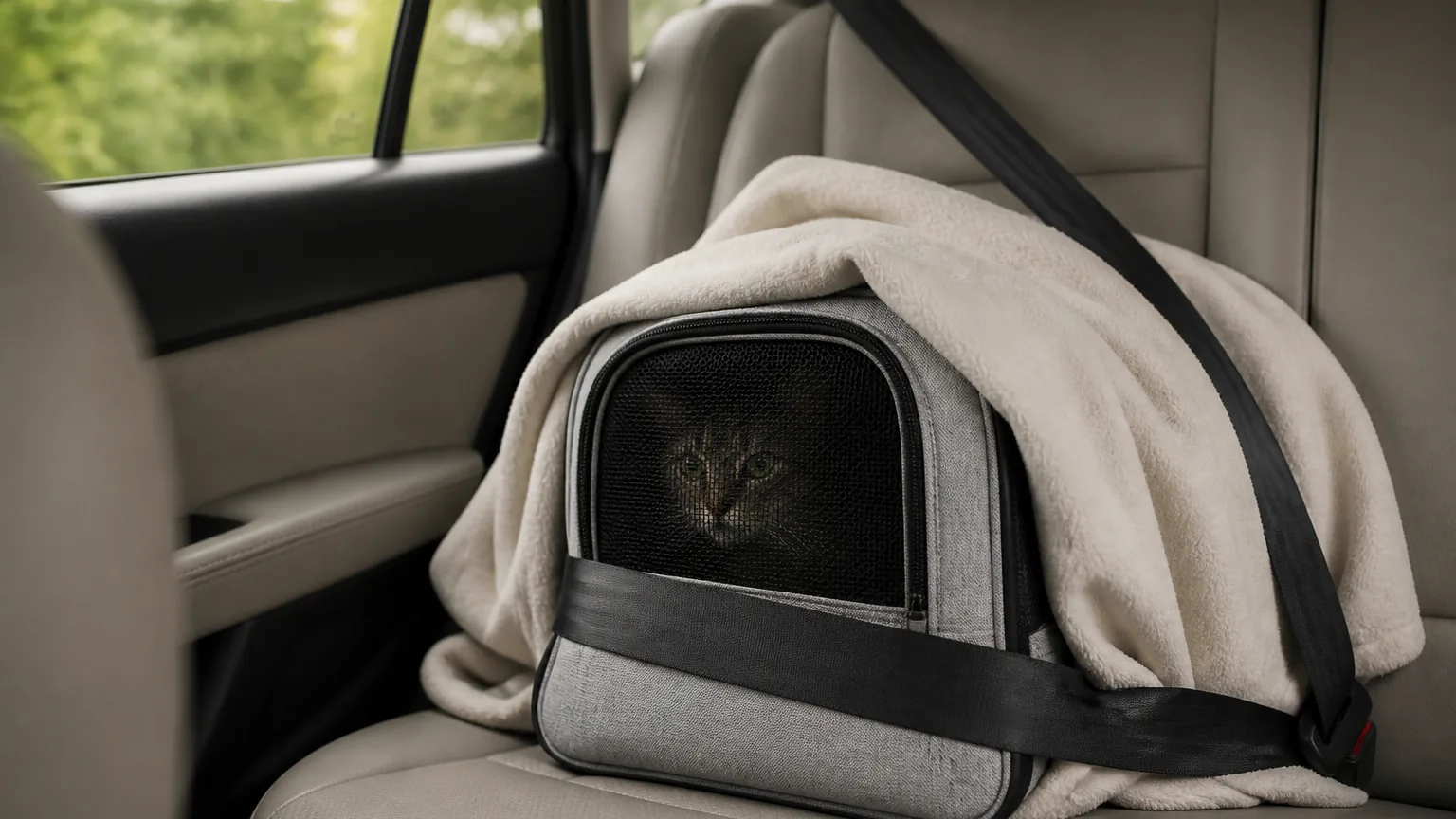
The part you cannot. Waiting-room and exam-room stress did not differ between groups. That is a job for the clinic and the appointment, not for your training: ask for the first slot of the day, request a cat-only waiting area or wait in the car, put a towel over the carrier, and ask whether the clinic will examine the cat in the bottom half of an openable carrier. Most cats in the study chose to stay in that bottom half — a carrier that splits is doing work no amount of home training substitutes for.
That last point is the one worth acting on when you buy. A carrier that opens from the top, or splits cleanly in two, means the cat is never dragged out through a small front door. Ours is a ventilated travel carrier built around that idea. To be straight about the limits: we have not put it through any airline or IATA compliance testing, so we make no claims about cabin travel — only about getting a cat to the vet with less handling.
The uncomfortable summary
Carrier training is worth doing. It measurably improves the car ride and shortens the examination. But it is six weeks of work that most owners will not complete, aimed at one half of a two-half problem, and the marketing framing of "train your cat and vet visits stop being stressful" is not what the data shows.
If you only have a week before an appointment, skip the training programme. Put the carrier out, cover it with a familiar blanket, book the quietest slot, and plan the handover so nobody has to tip the cat out of a front-loading box. A cat that hides when the carrier comes out is reading a signal correctly — the fix is to change what the signal predicts, and to stop expecting home training to solve the part that happens at the clinic.
Training is one of four interventions that have been through a controlled trial, and it is the one with the narrowest useful range. Taking your cat to the vet sets it alongside the other three — pheromone spray, pre-appointment medication, and the design of the carrier itself — with the size of each effect and the point where its evidence stops.
Related reading: if your cat's behaviour around the carrier is part of a broader pattern of avoiding things in the home, why cats scratch furniture covers how territory and predictability shape what cats will and won't approach. On the general principle of checking a claim before repeating it, our review of the feeding-schedule evidence walks through a study that lost its qualifiers the same way this one has.
Sources
- Pratsch L, Mohr N, Palme R, Rost J, Troxler J, Arhant C (2018). Carrier training cats reduces stress on transport to a veterinary practice. Applied Animal Behaviour Science 206:64–74. DOI 10.1016/j.applanim.2018.05.025. Blinded randomised controlled trial, 22 cats, paired-sample design. All authors declared no conflict of interest and the study received no commercial funding.
- Cat Stress Score as originally defined in Kessler MR & Turner DC (1997), used here in modified form.
All figures above are quoted from the published abstract and conclusion. Where the study reports a limitation — incomplete training in most cats, baseline imbalance between groups — we have reproduced it rather than omitted it.
Related reading
- Why Do Cats Scratch Furniture? What the Owner Surveys Actually Found
- Free Feeding vs Scheduled Feeding Cats: What the Controlled Trial Actually Measured
- XueQiu Pets carrier and travel range