Editorial — Published 2026-08-31 — By Wangzian, Pet Lifestyle Curator
Do Cats Shed More in Autumn?
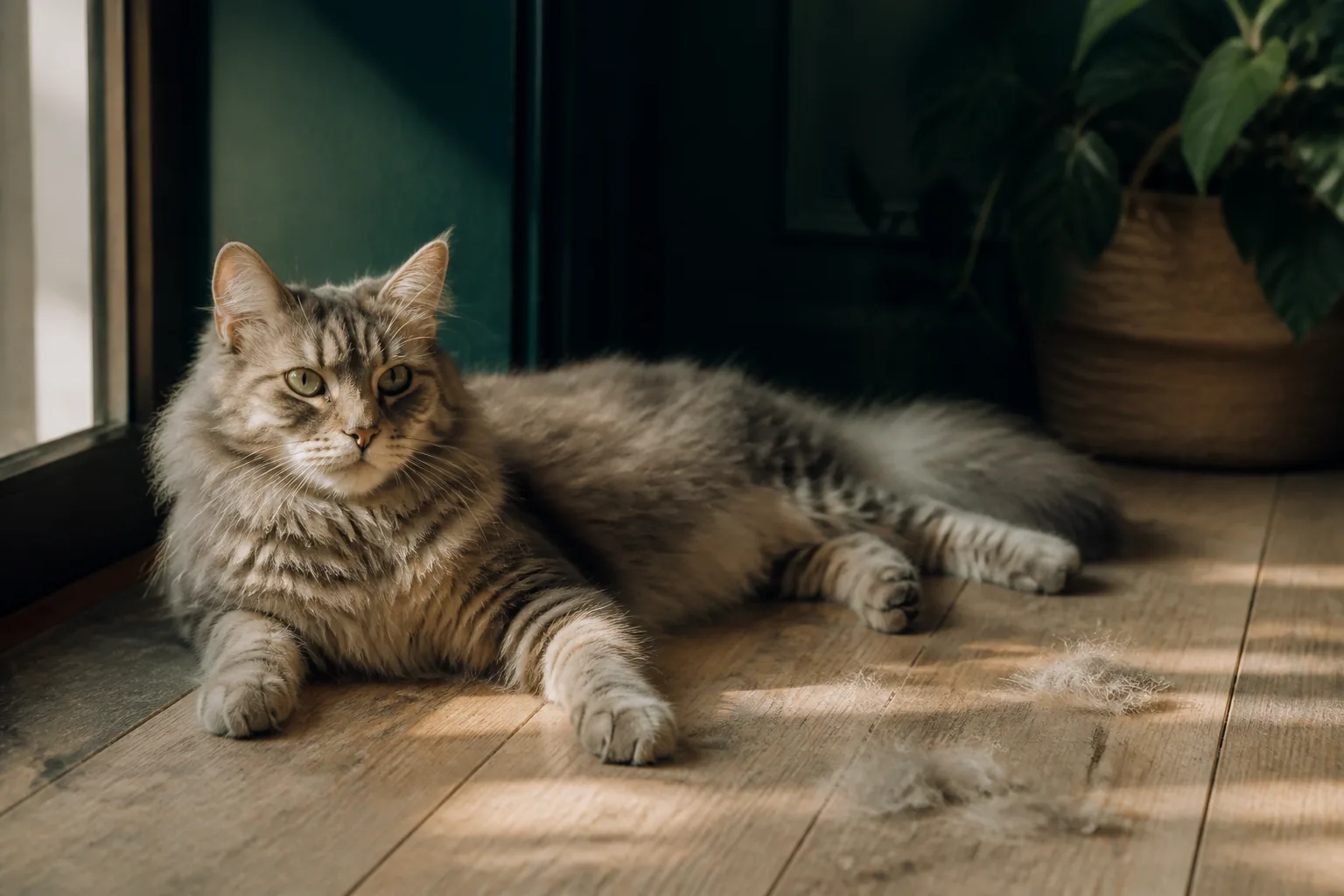
Yes — autumn is when the summer coat gives way to a thicker winter one, so shedding picks up. But the change is gradual, not a burst, and an indoor cat under year-round electric light may barely follow the calendar at all. If your cat's shedding just spiked hard in a week, the season is probably not the whole story.
That second half is the part I had wrong for years.
What was actually measured
The most direct evidence I can find is old and small: a 1976 study in Research in Veterinary Science that followed four cats for 20 months, through one winter and one summer, sampling follicle activity rather than just eyeballing the coat.
Two findings are worth having in your head.
The coat does change length, modestly. Outer coat went from 25 mm in summer to 30 mm in winter. Undercoat went from 12 mm to 15 mm. So the winter coat is real — but it is a 5 mm and 3 mm difference, not a transformation.
Replacement is gradual, not a moult. This is the part that reframes it. Even at the summer peak, no more than 70% of outer coat hairs and 50% of the undercoat were active at once. Follicle activity peaked around February and bottomed out in August, and the author's own conclusion was that "despite a basic seasonal cycle, hair replacement is relatively gradual."
A cat is not a husky. There is no coat-blowing week where it all comes out.
The trap in those month names
The study was run in Australia. February is late summer there and August is late winter — the reverse of the northern hemisphere.
So do not read "peak activity in February" as a fact about your February. Translated to a northern calendar, peak follicle activity lands around late summer, which is roughly now: the end of August into September. That timing is why this question gets asked every autumn.
I am flagging this because the hemisphere flip is easy to miss and it inverts the entire schedule.
Why your indoor cat may not follow any of this
The trigger for seasonal coat change is day length, not temperature. Photoperiod drives the hormonal signal; the cold itself does not.
An indoor cat lives under artificial light that stays roughly constant from June to December, and in a home that is 21°C year round. The seasonal signal it receives is badly muffled — some daylight through windows, but nothing like the swing a barn cat gets.
This is a mechanism, not a measured result, and I want to be honest about that. I could not find a study comparing indoor and outdoor cats on shedding volume; if one exists I have not read it. What I can tell you is what four cats in our own test room look like: our two longhairs shed noticeably year round with a mild autumn uptick, not a distinct season. That is an observation from one household, not evidence.
The practical version: if your indoor cat sheds fairly steadily all year, that is unremarkable. If you were expecting a tidy autumn season and are not getting one, nothing is wrong.
What actually warrants attention
Since the seasonal change is gradual, a sudden change is the signal worth acting on. A genuine spike over days rather than weeks is not the calendar.
Things that do cause abrupt shedding changes: stress, a diet change, parasites, and a range of skin and systemic conditions. Bald patches, broken hairs, scabbing, or itching are all different from ordinary shedding and belong in front of a vet — and our guide to taking your cat to the vet covers getting them there in a state where the skin can actually be examined.
One more that owners miss: a cat that suddenly cannot groom itself will look like it is shedding more, because the loose hair stays in the coat instead of being licked out. In an older cat, that is often arthritis rather than a coat problem.
What to do about the autumn uptick
Nothing dramatic. Brush more often, briefly.
Our shedding-season brushing schedule has the full breakdown by coat type, but the short version is daily for longhairs and every second or third day for shorthairs, in two-minute sessions rather than one long one. The autumn uptick does not change the method — it changes how often the method is worth running.
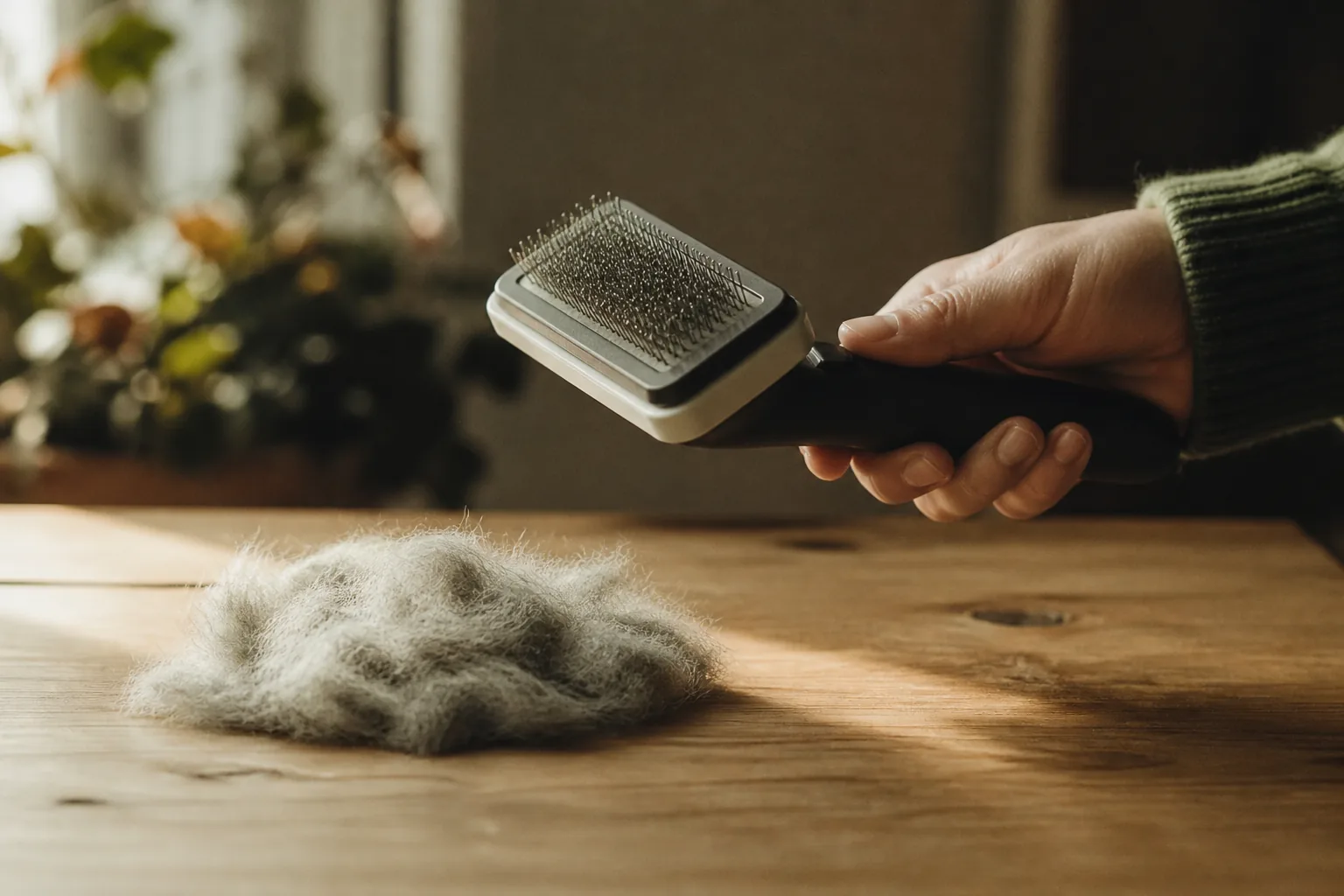
The one tool that matters here is a slicker that reaches the undercoat, because the undercoat is what thickens. We stock a self-cleaning slicker brush with a one-press retracting head; the retracting part is the reason people keep using it rather than abandoning it after a fortnight of picking hair out of the pins.
We do not sell a deshedding blade or an undercoat rake, and I will not pretend the slicker outperforms one — I have not run that comparison.
Water, briefly
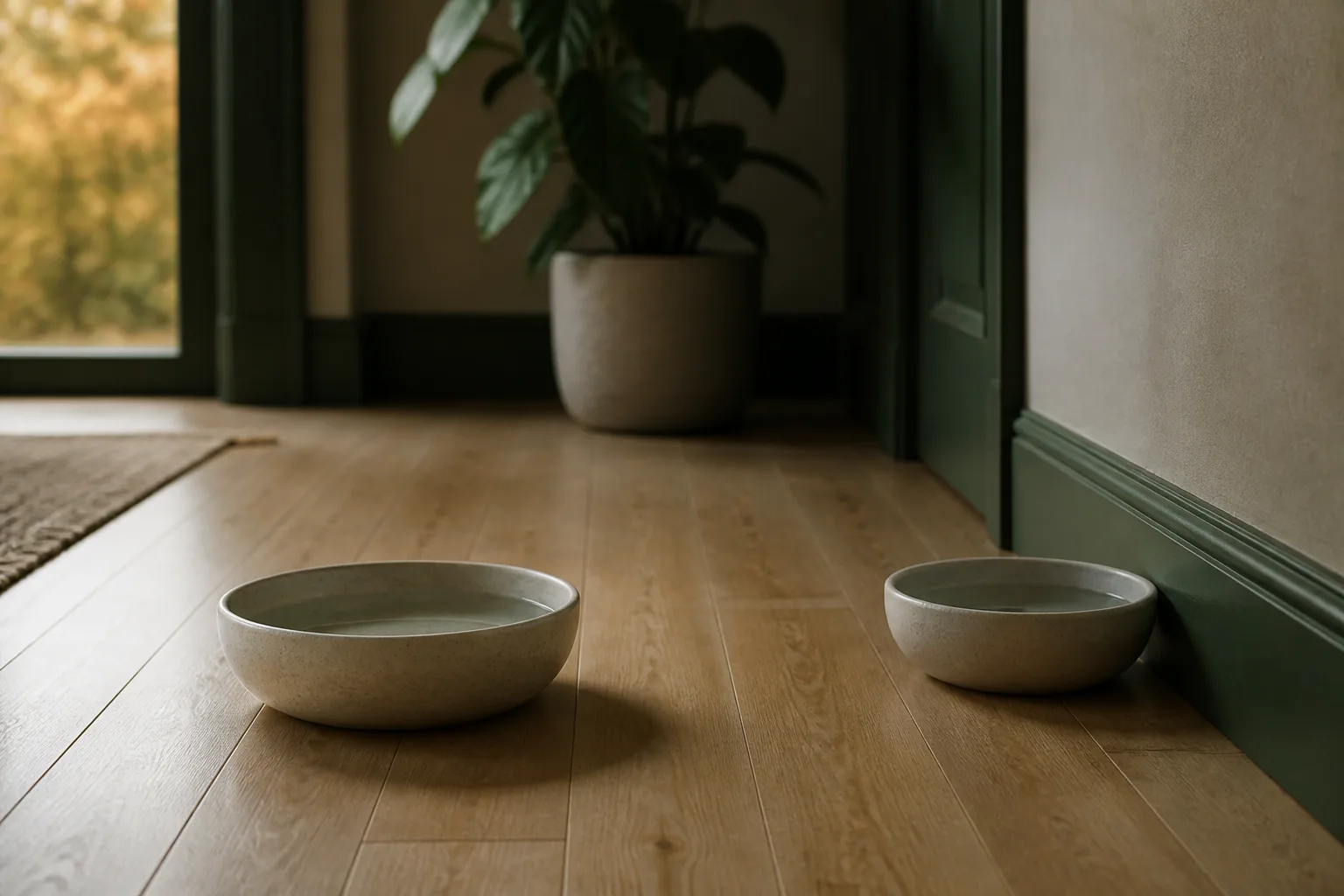
Hair moves through a dry gut poorly, and more loose hair swallowed means more hair to move. If your cat drinks badly, what actually changes water intake is worth ten minutes: bowl placement and type do more than most owners expect. Again, mechanism rather than trial data.
The short answer, restated
| Question | Answer |
|---|---|
| Do cats shed more in autumn? | Yes, modestly — the summer coat is replaced by a thicker winter one |
| How much thicker? | Outer coat 25→30 mm, undercoat 12→15 mm (four cats, 1976) |
| Is it a sudden moult? | No. At peak, ≤70% of outer hairs and ≤50% of undercoat are active |
| Does an indoor cat follow it? | Probably weakly — photoperiod drives it, and indoor light is near-constant |
| When should I worry? | Days-not-weeks onset, bald patches, scabbing, itching, or a cat that stopped grooming |
Sources
- Ryder ML (1976). Seasonal changes in the coat of the cat. Research in Veterinary Science, November 1976. PMID 1025634. Abstract read in full; the full text sits behind a paywall and I have not read it, so everything above comes from the abstract's reported figures.
Limitations you should weigh: four cats is a very small sample. The study ran in Australia, so all month names are southern-hemisphere and must be flipped for northern readers. It is fifty years old. It measured follicle activity and coat length, not the amount of hair landing on your floor — those are related but not the same measurement, and no figure here should be read as "your cat sheds X% more in autumn."
- The indoor-lighting argument is a mechanism inferred from photoperiod driving the coat cycle. No study is cited for it because I could not find one comparing indoor and outdoor cats on shedding volume. Treat it as reasoning, not evidence.
- Coat-type brushing intervals and the four-cats-in-our-office observation are XueQiu Pets test-room practice, not research findings.
Written by Wangzian, who runs XueQiu Pets and keeps four cats. Drafted with AI assistance; the source abstract was read and every figure checked against it by a human before publishing.