Editorial — Published 2026-08-15 — By Wangzian, Pet Lifestyle Curator
How Far Apart Should Litter Boxes Be? A 421-Owner Study Says You Are Asking the Wrong Question
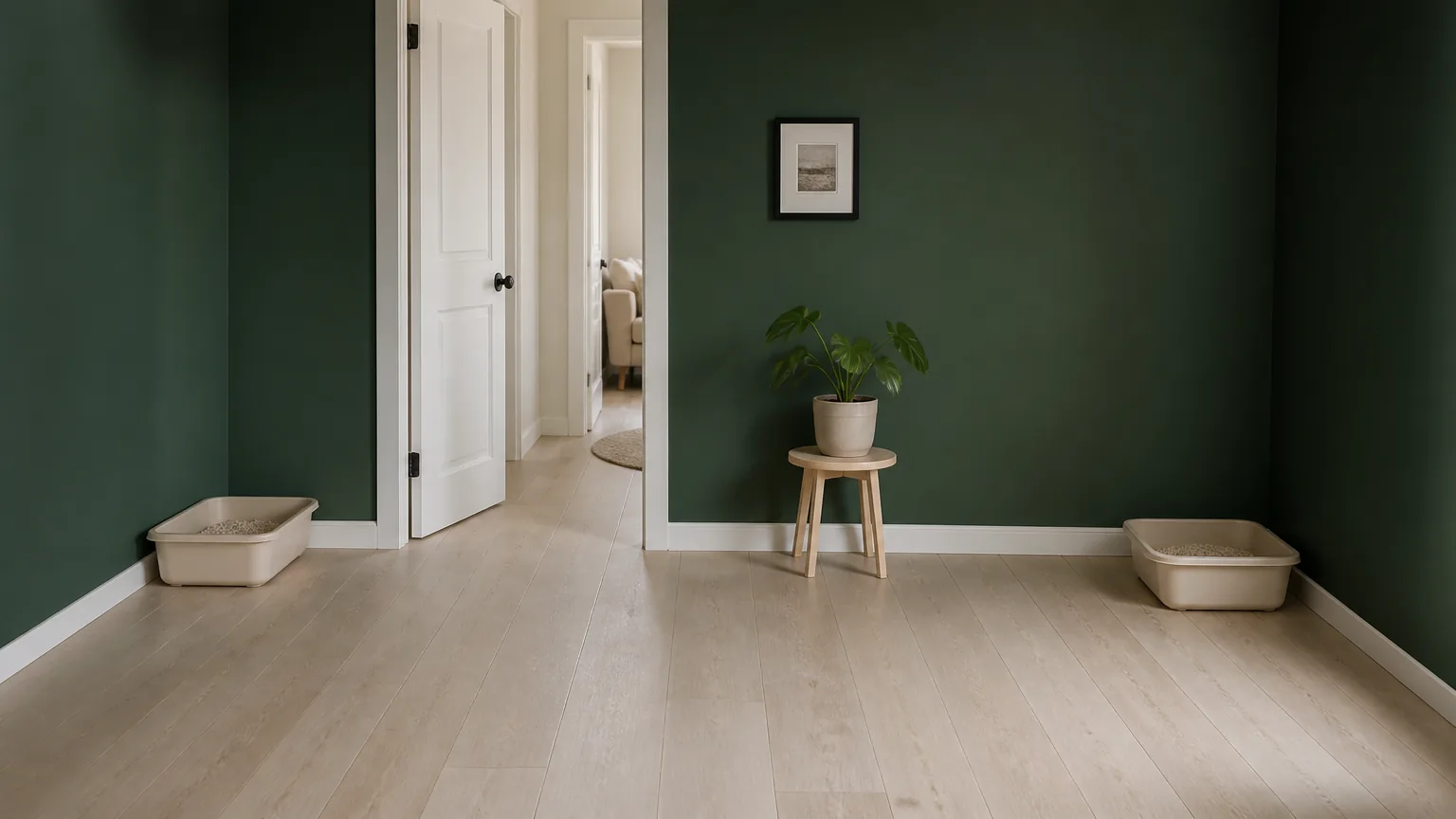
There is no measured distance. A 2026 study of 421 cat owners tested litter box location against house-soiling and found no association whatsoever — p=0.686. The same study found box number strongly associated at p<0.001. If you have two boxes side by side and a soiling problem, the gap between them is unlikely to be the cause.
What I found when I searched this question
Before writing, I searched the exact phrase and read the whole first page. Here is what it actually contains:
| Source | What it answers |
|---|---|
| Reddit — "Is it ok to put two litterboxes next to each other?" | Opinions, no data |
| Facebook group post | "Do they need to be in different rooms?" — unanswered |
| Preventive Vet | The n+1 rule (how many, not how far) |
| Quora | "One per cat plus one is the accepted standard" |
| Arm & Hammer | "Place the boxes well away from each other" — no distance |
| JustAnswer | n+1 formula again |
Six results. Not one gives a distance. Four answer a different question — how many boxes — and present it as though it settles placement. The closest anyone comes is "well away from each other," which is not a measurement.
That gap is why this article exists. The honest answer is that nobody has measured an optimal spacing, and the studies that do exist point somewhere else entirely.
The study that tested location directly
A 2026 paper in Applied Animal Behaviour Science surveyed 421 cat owners. It ran multivariable logistic regression across litter box management, social environment, household features and health. Crucially, it tested location as its own variable.
From Table 3, bivariate associations with house-soiling:
| Variable | p-value | Effect size (Cramér's V) |
|---|---|---|
| Number of litter boxes available | <0.001 | 0.361 |
| Number of cats sharing boxes | <0.001 | 0.368 |
| Elimination on vertical surfaces | <0.001 | 0.492 |
| Frequency of cleaning | <0.001 | 0.243 |
| Frequency of washing with water | 0.029 | 0.172 |
| Litter box location | 0.686 | 0.035 |
| Distance from food and water | 0.692 | 0.059 |
| Use of deodorising products | 0.924 | 0.016 |
Read the bottom half of that table. Location, distance from food and water, and deodorisers all sit near p=0.7 or above with effect sizes under 0.06 — statistically indistinguishable from noise.
The authors state it plainly: litter box type, size, location, distance from food and water, use of deodorising products, and whether owners sought professional help "were not significantly associated with house-soiling."
Meanwhile the variables that did matter are all about quantity and cleanliness: too few boxes, too many cats per box, and cleaning six times a week or less.
Why "well away from each other" persists anyway
The advice is not baseless, it is just supported by different evidence than people assume.
The reasoning comes from resource distribution in multi-cat homes. Put every box in one spot and they work as a single resource. One cat can then guard that spot and block the rest.
That dynamic is real. The same study found homes with more than three cats had substantially higher odds of soiling, and tied the behaviour to social conflict between cats living together.
So the principle holds: separated resources reduce the chance that one cat controls all of them. What does not exist is a number. No study has compared boxes at one metre against boxes at five metres and measured the difference.
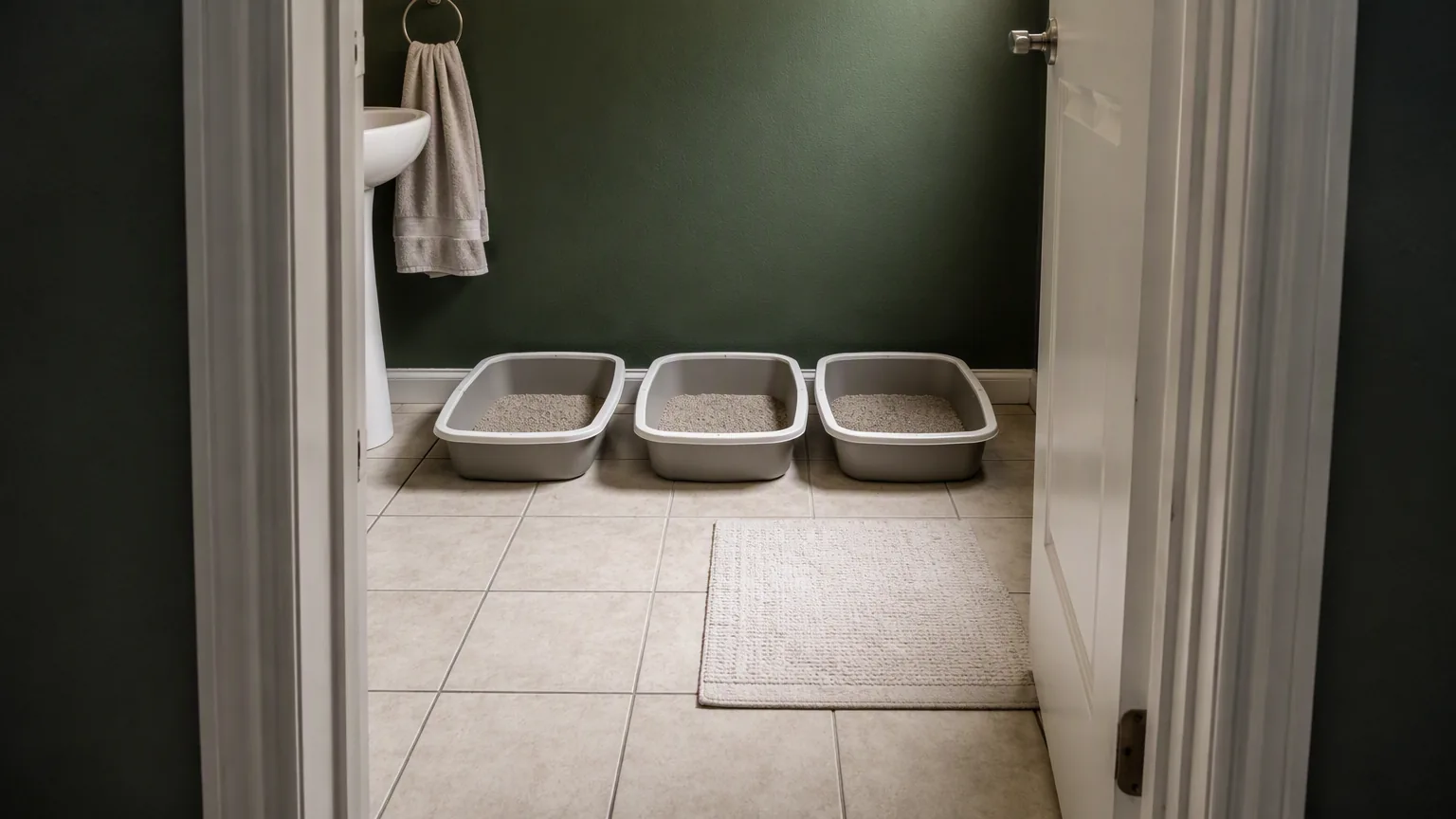
The distinction matters practically. Say you live in a studio flat and your two boxes sit two metres apart. The evidence does not support worrying about that. Now say you have four cats and every box is in the same bathroom. That concern is legitimate — not because of centimetres, but because one doorway controls access to every toilet in the house.
What actually correlates with problems
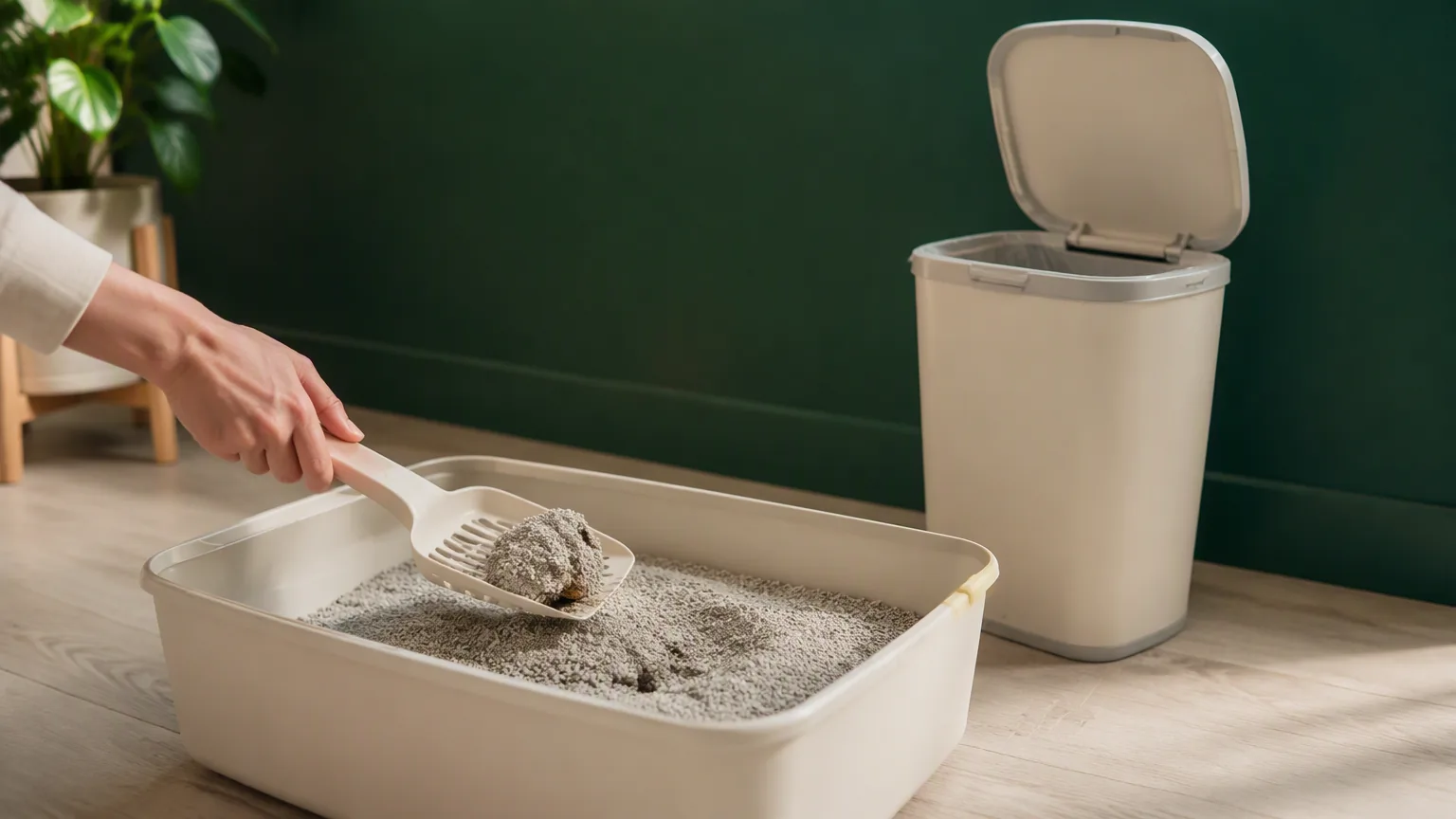
Ordered by effect size from the 421-household data:
- Number of cats sharing boxes (V=0.368) — excessive sharing was strongly associated with soiling.
- Insufficient number of boxes (V=0.361), defined in the study as fewer than cats+1.
- Cleaning frequency (V=0.243) — six times a week or fewer raised risk.
- Washing with water (V=0.172) — less frequent washing raised risk.
Note what item 2 means for the n+1 rule. Those first-page results were not wrong to cite it — this study found insufficient box numbers strongly associated with soiling. They were wrong to offer it as an answer to a question about distance, which the same dataset says does not matter.
There is one more finding worth carrying: households with more than three cats saw substantially higher odds regardless of management. Past a certain density, box arithmetic stops being the main variable and social conflict takes over.
So how far apart should litter boxes be, in practice?
Given that location showed no measurable effect, the defensible advice is narrow:
Put boxes where you will actually clean them. Cleaning frequency is a top-four correlate with a real effect size. A box in an inconvenient basement gets scooped less. That is a location effect, but it runs through your behaviour, not the cat's preference.
Avoid a single choke point in multi-cat homes. Not for distance reasons — so that no one cat can block access to every box at once. Different rooms, or at minimum different approaches, matter more than metres.
Do not move boxes to fix a soiling problem before checking number and cleanliness. Those are the variables with evidence behind them. Rearranging furniture is the intervention with p=0.686.
In a small flat the constraint is different. Distance between boxes stops being the question when there is only one plausible room. A separate survey of 3,106 cats, most of them in apartments, found 47.33% of homes ran a single box and just over half kept it in the bathroom — what that does and does not cause is set out in where to put a litter box in a small apartment.
Get the box itself right first. Size showed no significant association with soiling in this survey, but a separate free-choice trial found cats used 50cm boxes more than twice as often as 40cm ones — the two studies measure different things, and I covered that distinction in does litter box size matter for cats.
What this study cannot tell you
It is cross-sectional. The authors are explicit that the design "does not allow causal conclusions." Households with soiling problems may have added boxes in response, not before.
It is owner-reported. Location was a survey category, not a measured distance. It is entirely possible that a well-designed spacing experiment would find an effect this survey could not detect — absence of evidence at p=0.686 is not proof of no effect.
It does not cover litter type or box height. Other work suggests litter substrate can outweigh the box itself, which is a separate variable this survey did not isolate.
I would rather state those limits than present one survey as the final word. What I can say is that every page currently ranking for this question offers no evidence at all, and this survey is the only thing I found that tested location directly.
We do not sell litter boxes
Same disclosure as the last article in this series: we have no litter box to sell you, so nothing here routes to a product. The only adjacent thing we make is a lidded bin for scooped waste, which is a disposal problem rather than a placement one.
For a case where the obvious explanation for a cat's behaviour turned out not to be the one the evidence supported, why cats scratch furniture covers the same pattern in a different domain.
---
Sources
- de Azevedo CS et al. (2026). Multifactorial drivers of house-soiling behaviour in domestic cats (Felis catus): effects of social environment, management, care and health. Applied Animal Behaviour Science. 421 cat owners, multivariable logistic regression plus six formative indices. PDF downloaded and read in full (112,708 characters extracted). All p-values and Cramér's V figures above are taken directly from Table 3; the "not significantly associated" quotation is from the results section, lines 470-473 of the extracted text.
- Cluster context: the free-choice box-size trial referenced in passing is Iwabuchi-Inoue et al. (2025), covered in full in the linked article rather than restated here.
On the search results table: those six sources were recorded from the first page of results for "how far apart should litter boxes be" on 15 August 2026. Source types are named rather than linked, because the point is the absence of any distance figure, not criticism of individual sites.
What we do not claim: we sell no litter box and hold no data of our own on placement. This is not veterinary advice for your cat; house-soiling warrants a vet visit to rule out medical causes before any rearranging, and the study's own authors screened for exactly that.
Related reading
- Does Litter Box Size Matter for Cats? A 78-Cat Study Says Yes — With One Catch
- Why Cats Scratch Furniture — And What the Evidence Actually Supports
- XueQiu Pets lidded litter waste bin